Preserving negatives, slides, and prints is easier when you choose a scanner that matches the size of your collection and the quality you need. The best film scanners for digitizing photos range from simple standalone viewers to professional flatbed systems with advanced dust and scratch correction.
Below, we compare 10 options for different budgets and workflows, including scanners for 35mm film, larger formats, printed photos, and detailed archival projects.
Best 10 Film Scanners for Digitizing Photos Picks for 2026
Best All-in-One Film Scanner
Magnasonic FS71 24MP Film Scanner

- 24MP JPEG scans from multiple film and slide formats
- 5-inch screen with HDMI viewing
- Computer-free operation with SD card storage
Best For: Families digitizing varied film and slides with minimal setup
Best Flatbed Photo Scanner

- 4800 dpi optical resolution
- Scans photos, documents, artwork, and books
- One-touch scanning with faded-photo restoration
Best For: Users needing one compact scanner for photos and documents
Best Easy-Load Film Scanner
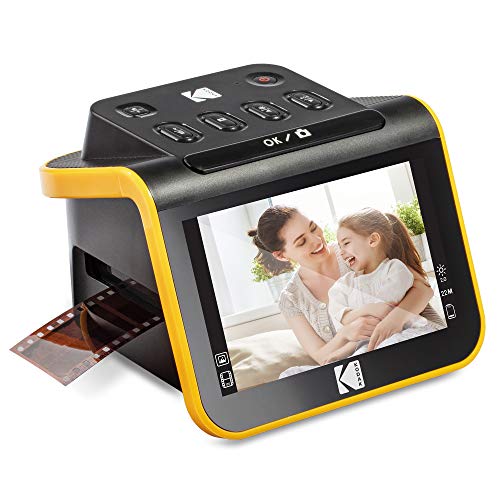
- 22MP scans for 135, 110, and 126 formats
- 5-inch LCD with gallery mode
- Continuous-loading tray and included cables
Best For: Casual users digitizing slides and negatives at home
Best Pro-Quality Film Scanner
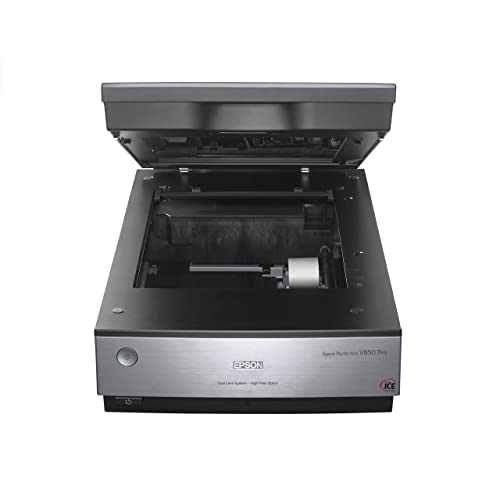
- 6400 dpi resolution for detailed scans
- 4.0 Dmax for tonal and shadow detail
- Dual-lens system with Digital ICE
Best For: Serious archivists and professionals pursuing high-detail scans
Versatile Film Digitization
KODAK SCANZA Film & Slide Scanner
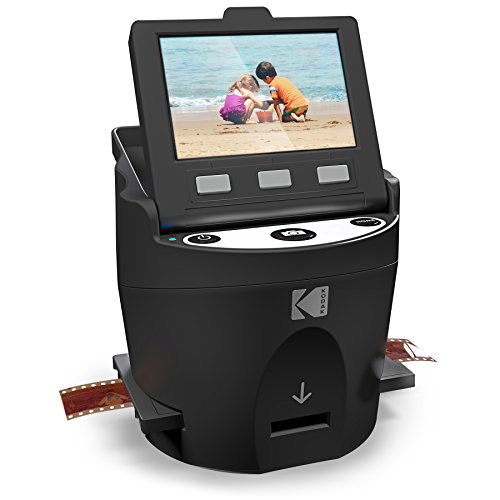
- Converts 35mm, 126, 110, Super 8, and 8mm film
- Includes multiple adapters and a 3.5-inch LCD
- One-touch JPEG scanning with RGB and resolution controls
Best For: Mixed-format home film collections
Fast Photo Archiving
Plustek ePhoto Z300 Photo Scanner

- Scans 4x6 photos in about 2 seconds at 300 dpi
- Supports common photo sizes plus letter and A4 paper
- Includes one-click enhancement tools for faded images
Best For: Large batches of printed photos
Touchscreen Film Archiving
HP FilmScan HPFS500 Film & Slide Scanner
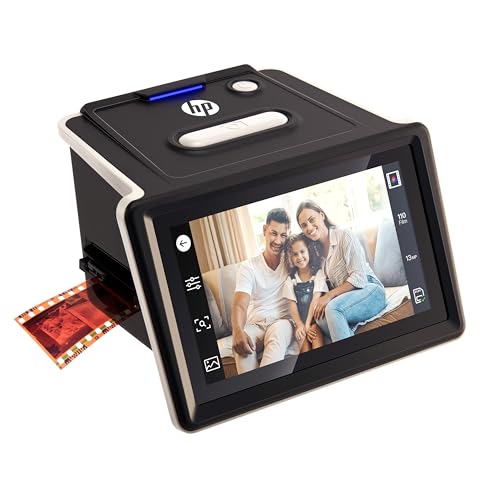
- Standalone operation without a computer
- Supports 135, 126, and 110 negatives and slides
- 5-inch touchscreen with preview and editing controls
Best For: Computer-free scanning of mixed film archives
Best for Effortless Home Archiving

- Quick-feed tray for smoother batch scanning
- Direct SD/SDHC saving without a computer
- Supports 135mm, 110mm, and 126mm film
Best For: Families digitizing mixed film collections at home
Best for Touchscreen Editing

- 7-inch touch LCD for previews and adjustments
- 13MP sensor handles color and B&W negatives
- USB and HDMI connectivity for transfers and display
Best For: Users wanting simple on-device editing and viewing
Best Multifunction Value

- Scans film, slides, photos, and business cards
- 22MP output with included 8GB SD card
- Includes holders, cleaning tools, and three-year warranty
Best For: Mixed home and office digitizing projects
Best All-in-One Film Scanner – Magnasonic FS71 24MP Film Scanner
The Magnasonic FS71 is a practical choice among film scanners for digitizing photos when you want quick, computer-free scanning. It handles 35mm, 110, 126, Super 8 film, and several slide formats, saving JPEG files to an SD card.
Best For: Families digitizing varied film and slides with minimal setup.
Pros:
- Scans supported film and slides into 24MP JPEG files.
- Large 5-inch display with HDMI output for viewing on a TV or monitor.
- Built-in brightness, RGB, flip, and mirror adjustments.
- Fast scanning in less than five seconds per photo, according to the supplied notes.
Cons:
- SD card and HDMI cable are not included.
- Its stated minimum system requirement is Windows 7, which may limit some computer workflows.
With broad format support, a large preview screen, and no required computer software, the FS71 emphasizes convenience over a traditional desktop scanning workflow.
Best Flatbed Photo Scanner – Epson Perfection V19 II
The Epson Perfection V19 II is a versatile flatbed option among film scanners for digitizing photos, particularly for people who also need to scan documents, artwork, or books. Its 4800 dpi optical resolution and USB-powered design suit home and office projects.
Best For: Users who want one compact scanner for photos, documents, and artwork.
Pros:
- 4800 dpi optical resolution for detailed photo scans.
- Scans documents and images up to 8.5 by 11.7 inches.
- Easy one-touch scanning with dedicated buttons.
- Easy Photo Fix technology helps restore color to faded photos.
Cons:
- It is a flatbed scanner rather than a dedicated film-only scanner.
- It connects through USB and does not list onboard SD card storage.
The V19 II is a strong multipurpose choice when photo quality and everyday scanning flexibility matter more than a specialized film-feed design.
Best Easy-Load Film Scanner – KODAK Slide N Scan
The KODAK Slide N Scan is designed for straightforward home digitizing of 135, 110, and 126 negatives and slides. For shoppers comparing film scanners for digitizing photos, its 5-inch LCD, continuous-loading tray, and direct SD card saving make the process approachable.
Best For: Casual users who want quick previews, simple edits, and direct file saving.
Pros:
- 22MP digital output for supported negatives and slides.
- Large LCD with gallery mode for previewing and sharing images.
- Easy-load inserts support continuous loading.
- Includes film adapters, a cleaning brush, USB cable, and HDMI cable.
Cons:
- SD or SDHC card is not included.
- Supports cards up to 32GB, less than some comparable models.
- The supplied notes contain an inconsistent “1422MP” reference, while the listed specification states 22 megapixels.
This KODAK model focuses on convenience and accessible controls, making it well suited to occasional family-archive projects rather than advanced desktop scanning.
Best Pro-Quality Film Scanner – Epson Perfection V850 Pro
The Epson Perfection V850 Pro is the premium-oriented choice among these film scanners for digitizing photos. It combines high-resolution scanning, a dual-lens system, and a 4.0 Dmax rating for users focused on fine detail, tonal range, and professional-style results.
Best For: Serious photo archivists and professionals seeking high-detail scans.
Pros:
- 6400 dpi resolution is specified for pro-quality color and detail.
- 4.0 Dmax supports smooth gradations and shadow detail.
- Dual-lens system selects a lens for the scanning task.
- CCD sensor and Digital ICE support advanced photo-scanning workflows.
Cons:
- At 20.9 pounds, it is substantially heavier than the compact models.
- USB connectivity requires a computer-based workflow.
- Its listed dimensions require considerable desk space.
The V850 Pro is best viewed as a dedicated, high-end desktop investment for demanding scanning work, not a quick point-and-scan solution.
Versatile Film Digitization – KODAK SCANZA Film & Slide Scanner
For shoppers comparing film scanners for digitizing photos, the KODAK SCANZA is a flexible option for converting several common film formats to JPEG files. Its included adapters, built-in display, and one-touch controls support a straightforward standalone workflow.
Best For: Families digitizing mixed collections of 35mm, 126, 110, Super 8, and 8mm negatives or slides.
Pros:
- Supports 35mm, 126, 110, Super 8, and 8mm film formats.
- Includes multiple film inserts and adapters for flexible scanning.
- Has a bright, tilting 3.5-inch LCD with adjustable brightness.
- Offers one-touch scan-and-save controls plus RGB and resolution adjustments.
Cons:
- Does not support film formats beyond those listed by the manufacturer.
- SD card is not included, though cards up to 128GB are supported.
- Its minimum listed system requirement is Windows 7, which may matter for some computer-based setups.
The SCANZA stands out when format flexibility matters more than a computer-connected workflow. The included cables, adapters, and cleaning brush make it a practical starter kit for varied home archives.
Fast Photo Archiving – Plustek ePhoto Z300 Photo Scanner
The Plustek ePhoto Z300 is designed for shoppers seeking film scanners for digitizing photos who also need to process printed pictures. Its sheet-fed design scans common photo sizes quickly and connects by USB for computer-based archiving.
Best For: Digitizing large batches of printed 3×5, 4×6, 5×7, and 8×10 photos, along with letter- and A4-size paper.
Pros:
- Scans a 4×6 photo in about 2 seconds at 300 dpi.
- Supports 300 dpi and 600 dpi settings, with optical resolution up to 600 dpi.
- Accepts several photo sizes plus letter and A4 paper.
- Includes image-enhancement tools for restoring faded photos.
Cons:
- Uses a USB connection and requires a compatible computer workflow.
- Its standard sheet capacity is one item at a time.
- This model is intended for photos and documents rather than listed film formats.
Choose the ePhoto Z300 when speed and printed-photo throughput are the priorities. It is particularly well suited to working through a sizable photo box, with enhancement tools available for older, faded images.
Touchscreen Film Archiving – HP FilmScan HPFS500 Film & Slide Scanner
The HP FilmScan HPFS500 is a convenient choice among film scanners for digitizing photos when you want to work without a computer. It combines standalone operation, a large touchscreen, and support for several common negative and slide formats.
Best For: Users digitizing 135, 126, and 110 negatives or positive slides with direct touchscreen control.
Pros:
- Works as a standalone scanner without requiring a computer.
- Supports 135, 126, and 110 negatives and positive slides.
- Features a 5-inch all-angle LCD touchscreen for previewing and editing.
- Uses a quick-load tray to help streamline batch scanning.
Cons:
- Its listed connection type is USB, while scanned media is stored on an SD card.
- The 22MP figure is interpolated from the 13MP CMOS sensor.
- Requires Windows 10 or later or macOS 10.15 or later for listed computer compatibility.
The HPFS500 is a strong fit for hands-on scanning sessions, especially if avoiding a computer is important. Its touchscreen and quick-load tray make it easy to preview images and move through a mixed film collection.
Best for Effortless Home Archiving – KODAK Slide N Scan Max
For shoppers comparing film scanners for digitizing photos, the KODAK Slide N Scan Max emphasizes a smooth, computer-free workflow. Its quick-feed tray, direct SD card saving, and support for 135mm, 110mm, and 126mm film make it practical for mixed family collections.
Best For: Home users digitizing batches of slides and negatives with minimal menu navigation.
Pros:
- Quick-feeding tray supports continuous scanning without repositioning every frame.
- Saves scans directly to SD or SDHC cards up to 32GB.
- Handles 135mm, 110mm, and 126mm film formats.
- 7-inch tiltable LCD provides convenient previews and doubles as a digital picture frame.
Cons:
- Its listed minimum system requirement is Windows 7, which may matter for computer-based workflows.
- USB is the listed connection type, so users should plan around SD-card or USB transfers.
The KODAK is a strong fit when convenience and format flexibility matter more than an advanced computer-scanning setup. One-touch editing and a large display keep the process approachable for family archiving projects.
Best for Touchscreen Editing – HP Film & Slide Scanner
The HP FilmScan is a practical option among film scanners for digitizing photos when you want to preview and adjust images on the scanner itself. Its 7-inch touch display, 13-megapixel CMOS sensor, and quick-feed tray are designed for straightforward handling of mixed film formats.
Best For: Beginners and families who want on-device previews, basic editing, and slideshow viewing.
Pros:
- 7-inch color touch LCD supports previewing, editing, and showcasing images.
- 13-megapixel color CMOS sensor captures color and black-and-white negatives.
- Quick-feed tray and 50mm adapter support 135, 126, and 110 formats.
- USB transfer and HDMI output provide flexible viewing and sharing options.
Cons:
- The listed resolution is 1200 dpi, lower than some products marketed with higher numeric resolutions.
- Its 1.1-pound weight and larger footprint may be less convenient for highly portable use.
The HP stands out for users who prefer a visual, touch-driven workflow instead of relying on separate editing software. HDMI output and gallery mode also make it useful for displaying digitized memories.
Best Multifunction Value – KEDOK Photo and Film Scanner
The KEDOK combines film scanning with photo and business-card digitizing, making it a versatile choice among film scanners for digitizing photos. It can save files without a computer and includes an 8GB SD card, while its 5-inch LCD provides an immediate way to review scans.
Best For: Households or small offices preserving negatives, slides, prints, and name cards with one device.
Pros:
- 4-in-1 design scans 135 and 110 film, slides, photos, and business cards.
- 22MP output, internal 128MB memory, and included 8GB SD card support standalone use.
- 5-inch LCD offers wide-angle previews and digital picture-frame functionality.
- Includes multiple holders, cleaning accessories, and a three-year warranty.
Cons:
- At 2.2 kg, it is substantially heavier than the other listed scanners.
- The larger 9.5-by-7.9-by-5.1-inch dimensions may require dedicated storage space.
- Its listed connection type is USB, so wireless transfer is not indicated.
The KEDOK is appealing when versatility and included accessories are priorities. Its ability to scan several media types, combined with standalone storage and a longer warranty, makes it suited to broad household or office archiving tasks.
How We Picked the Best Film Scanners for Digitizing Photos
We evaluated these scanners by looking at the formats they support, advertised optical or interpolated resolution, scanning speed, preview-screen quality, file-transfer options, and ease of use. We also considered whether each model is designed primarily for film, printed photos, or both. Features such as Digital ICE, adjustable exposure, bundled holders, HDMI or USB connectivity, and compatibility with larger film formats can make a meaningful difference in real-world use.
Because scanning needs vary widely, this list includes both compact dedicated film scanners and flatbed photo scanners. A quick standalone unit may be ideal for sharing family images, while a high-end flatbed is better suited to photographers who want maximum detail and control.
Quick Comparison
| Best For | Scanner Type | What to Look For |
|---|---|---|
| Fast family archiving | Standalone film scanner | Simple controls, built-in display, broad format support |
| Printed photos | Flatbed or photo scanner | Large scanning bed, accurate color, fast photo capture |
| High-detail restoration | Professional flatbed | High optical resolution, film holders, Digital ICE |
| Occasional scanning | Compact USB model | Low setup effort, included software, easy file export |
Key Buying Factors for Film Scanners for Digitizing Photos
Film and Photo Format Support
Check whether the scanner accepts the formats in your collection. Many affordable units handle 35mm negatives and slides, while some also support 110, 126, Super 8, or 8mm film. If you plan to scan printed photographs, choose a flatbed or a model specifically designed for photos rather than a film-only device.
Resolution and Image Quality
Higher stated resolution does not always mean better results, especially when the figure is interpolated. For casual sharing, a modest dedicated scanner may be sufficient. For enlargements, cropping, or restoration, prioritize true optical resolution, a capable sensor, accurate color handling, and manual exposure controls.
Workflow and Connectivity
A built-in LCD can make standalone scanners quick and convenient, while USB connectivity is useful for transferring files directly to a computer. Consider whether you prefer memory-card storage, included editing software, HDMI output, or a fully computer-based workflow.
Dust, Scratches, and Handling
Film holders that keep strips flat and aligned help produce consistent scans. Hardware-based correction, such as Digital ICE on compatible flatbed systems, can reduce cleanup time, although it may not work with every film type. Clean the film and scanner surface before scanning to avoid recording additional dust.
Who Should Buy Which Film Scanners for Digitizing Photos?
Choose a standalone scanner if you want the fastest path from old negatives or slides to shareable digital files. Select a flatbed photo scanner if your collection includes prints or mixed-size originals. Serious photographers, archivists, and anyone planning large prints should consider a high-resolution model with stronger color controls and automated defect correction. If you have only a small batch of 35mm film, prioritize simplicity and price over advanced specifications.