Digitizing a box of family prints, preserving negatives, or creating searchable records is much easier with the right scanner. The best photo scanners for Windows balance image quality, speed, software compatibility, and convenient handling for the formats you actually own.
These 10 options cover fast automatic feeders, compact USB models, professional flatbeds, and larger scanners for books or oversized artwork. Use the guide below to narrow the list by workflow, budget, and required detail.
Best 10 Photo Scanners for Windows Picks for 2026
Best High-Volume Pick

- Batch-scans up to 36 photos
- Duplexes photos and handwritten notes
- Wi-Fi, USB, OCR, and enhancement tools
Best For: Large family photo archives and mixed document scanning
Best Simple Photo Workflow

- Scans 4-by-6 photos in about two seconds
- Supports photos up to 8 by 10 inches
- Includes image enhancement tools
Best For: Straightforward individual photo scanning
Best Compact All-Purpose Pick

- Compact design for small workspaces
- Up to 30 ppm duplex scanning
- USB and Wi-Fi connectivity
Best For: Mixed photo, document, receipt, and card scanning
Best Professional Detail
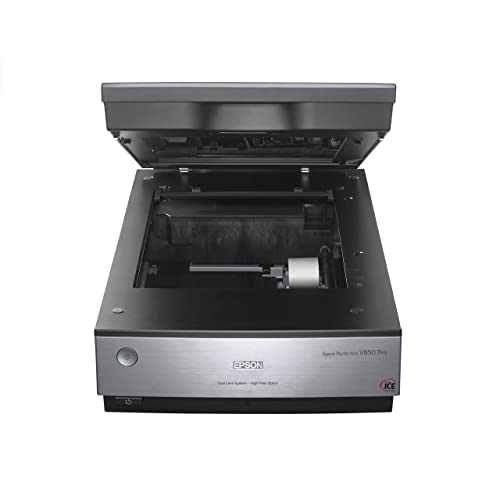
- 6400 dpi photo scanning
- 4.0 Dmax for shadow detail
- Dual-lens system with Digital ICE
Best For: High-detail photo archiving and restoration work
Best Flatbed Detail

- 4800 dpi optical resolution for detailed scans
- Easy Photo Fix restores faded photo color
- Removable lid accommodates books and thicker materials
Best For: Individual photos, artwork, and bound pages
Best Wireless Photo Workflow

- Scans up to 100 photos per minute
- Wi-Fi 6 and USB-C support flexible connections
- Touchscreen profiles automate sorting and optimization
Best For: Fast wireless scanning and organizing large photo collections
Best Large-Format Pick
VIISAN VF3120 A3 Flatbed Scanner
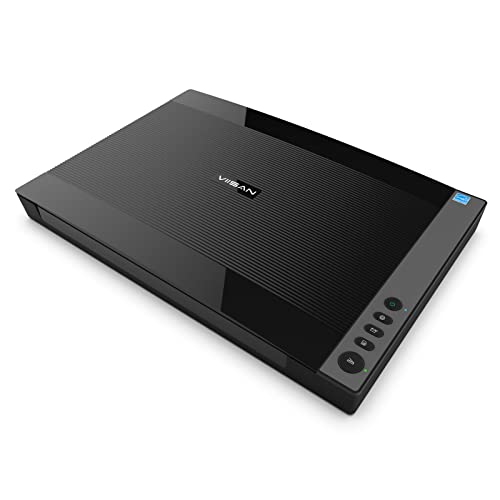
- Scans A3-size photos, books, and artwork
- 1200 dpi optical resolution with 48-bit color
- Windows 7–11 support and 8-second A3 scans
Best For: Large photos, artwork, books, and oversized documents
Best High-Resolution Flatbed

- 4800 x 4800 dpi photo scanning
- Slim, USB-powered flatbed design
- Auto scan and multi-page PDF buttons
Best For: Detailed standard-size photos and documents
Best Portable Option

- Ultra-light USB sheetfed design
- 15 ppm one-sided scanning
- Windows and macOS software support
Best For: Portable scanning of individual photos, cards, and receipts
Best High-Volume Pick – FastFoto FF-680W
For households digitizing large collections, the Epson FastFoto FF-680W is one of the most capable photo scanners for Windows. It can batch-scan up to 36 photos and capture a 4-by-6-inch photo in about one second at 300 dpi, while wireless and USB connectivity make placement flexible.
Best For: Quickly digitizing large photo collections while preserving handwritten notes on photo backs.
Pros:
- Batch-scans up to 36 photos and supports photos up to 8 by 10 inches.
- Duplex scanning captures images and handwritten notes on the reverse side in one pass.
- Includes automatic enhancement, color restoration, red-eye reduction, cropping, rotation, and de-skewing.
- Supports Wi-Fi, USB, OCR, cloud backup, and scans up to 45 ppm/90 ipm for documents.
Cons:
- Its 8.2-pound body is less portable than compact single-photo scanners.
- The listed minimum system requirement is Windows 7, so buyers should verify current software compatibility.
The FF-680W is the strongest choice here for speed and volume. Its duplex design and photo-preservation tools make it especially practical for family archives, while document scanning adds everyday versatility.
Best Simple Photo Workflow – Plustek ePhoto Z300
The Plustek ePhoto Z300 keeps photo scanning straightforward for Windows users. Insert photos one at a time, and it can scan a 4-by-6-inch photo in about two seconds at 300 dpi, with support for common photo sizes plus letter and A4 documents.
Best For: Users who want an easy, space-conscious way to digitize several common photo sizes.
Pros:
- Scans 4-by-6-inch photos in about two seconds and 8-by-10-inch photos in about five seconds at 300 dpi.
- Supports 3-by-5, 4-by-6, 5-by-7, and 8-by-10-inch photos, plus letter and A4 paper.
- CCD imaging and up to 600 dpi optical resolution support detailed scans.
- Includes one-click image enhancement and restoration functions.
Cons:
- USB connectivity requires a wired computer setup.
- The standard sheet capacity is one, so photos must be fed individually rather than batch-loaded.
The Z300 is a practical middle ground between a flatbed and a high-volume feeder. It prioritizes simple operation and quick individual scans, though large collections will require more hands-on feeding.
Best Compact All-Purpose Pick – ScanSnap iX1300
The ScanSnap iX1300 is a compact option for Windows users who scan photos alongside documents, receipts, and cards. Its small footprint, Wi-Fi or USB connectivity, and automatic image corrections make it useful when desk space and workflow flexibility matter more than specialized photo-archiving features.
Best For: Small desks and mixed scanning tasks involving photos, documents, receipts, and cards.
Pros:
- Space-saving 4.5-by-11.7-by-3.3-inch design fits small work areas.
- Scans at up to 30 pages per minute with duplex operation.
- Automatic de-skew, color optimization, and blank-page removal simplify scanning.
- Works over USB or Wi-Fi with computers, mobile devices, cloud services, and Chromebook through the mobile app.
Cons:
- It is positioned as a document and receipt scanner rather than a dedicated high-volume photo scanner.
- Its Windows minimum requirement is Windows 10 or Windows 11, which excludes older systems.
The iX1300 is the most versatile compact choice in this group. Choose it when photos are only part of your scanning workload and you value wireless access, automatic cleanup, and a tidy desktop setup.
Best Professional Detail – Epson Perfection V850 Pro
For Windows users who prioritize image detail over scanning speed, the Epson Perfection V850 Pro is the specialist option among these photo scanners for Windows. Its 6400 dpi resolution, 4.0 Dmax tonal range, dual-lens system, and Digital ICE are designed for high-quality photo work.
Best For: Detailed, color-critical photo scanning where professional image quality is more important than portability.
Pros:
- 6400 dpi resolution supports highly detailed scans.
- 4.0 Dmax is designed to preserve smooth gradations and shadow detail.
- Dual-lens technology selects between lenses for the scanning task.
- Digital ICE and CCD imaging support advanced photo restoration and capture.
Cons:
- At 20.9 pounds, it is substantially heavier than the other listed models.
- USB-only connectivity limits placement flexibility.
- The supplied operating-system list is older, so compatibility should be checked before purchase.
The V850 Pro is best suited to serious photo digitization rather than casual family scanning. Its high-resolution optical system can justify the larger footprint for users who need maximum detail and tonal control.
Best High-Volume Feeder – Canon imageFORMULA RS40
If you need photo scanners for Windows that can process a mixture of prints and paperwork efficiently, the Canon imageFORMULA RS40 is a strong fit. Its automatic feeder scans both sides at up to 40 items per minute and supports photos, documents, cards, receipts, and IDs.
Best For: Windows users digitizing batches of photos and mixed household documents.
Pros:
- Automatic feeder holds up to 60 sheets and scans both sides simultaneously.
- Handles varying media, including Polaroids, receipts, cards, and driver licenses.
- Bundled software offers photo enhancement, red-eye correction, and face smoothing.
- Supports JPG, TIF, BMP, PNG, PDF, and PPTX output formats.
Cons:
- Uses a USB connection rather than built-in wireless connectivity.
- Its 1200 dpi setting is interpolated rather than optical.
- Windows 8.1 or newer is required.
The RS40 prioritizes speed and convenience over flatbed-style handling. It is especially practical when you have large batches of photos and documents to scan, organize, and share.
Best Flatbed Detail – Epson Perfection V19 II
For Windows users seeking photo scanners with detailed image capture, the Epson Perfection V19 II offers 4800 dpi optical resolution in a compact flatbed design. It scans photos, artwork, books, and documents up to 8.5 by 11.7 inches.
Best For: Home users restoring individual old photos or scanning artwork with high optical detail.
Pros:
- 4800 dpi optical resolution supports detailed scans and enlargements.
- Easy Photo Fix technology restores color to faded photos with one click.
- High-rise removable lid accommodates books and thicker materials.
- USB-powered design is compact and lightweight at 3.1 pounds.
Cons:
- Flatbed scanning requires placing items one at a time.
- USB connectivity does not provide wireless scanning.
- Its standard sheet capacity is one item.
The V19 II is a sensible choice when scan quality and careful handling matter more than batch speed. Its flatbed surface is well suited to photos, artwork, and bound pages.
Best Wireless Photo Workflow – ScanSnap iX2500 Photo Edition
If you want photo scanners for Windows that connect easily to computers, mobile devices, and cloud services, the ScanSnap iX2500 Photo Edition stands out. It combines Wi-Fi 6 and USB-C connectivity with a touchscreen, automatic optimizations, and a feeder designed for fast photo and document batches.
Best For: Windows households that want fast, wireless photo scanning and streamlined file organization.
Pros:
- Scans up to 100 photos per minute with a feeder holding up to 36 photos or 100 documents.
- Includes three photo carrier sheets for delicate prints.
- Wi-Fi 6 and USB-C support connections to PCs, mobile devices, and cloud services.
- Touchscreen profiles and automatic naming, sorting, and optimization simplify workflows.
Cons:
- Windows support requires Windows 10 or Windows 11.
- Its 600 dpi resolution is lower than the Epson V19 II’s stated optical resolution.
- At 7.7 pounds, it is less lightweight than a compact flatbed scanner.
The iX2500 is built for speed, flexibility, and organization rather than maximum stated resolution. Its wireless features and touchscreen make it particularly convenient for families managing large photo collections across multiple devices.
Best Large-Format Pick – VIISAN VF3120 A3 Flatbed Scanner
If you need photo scanners for Windows that can handle oversized artwork, albums, books, or documents, the VIISAN VF3120 is built for large-format work. Its A3 scanning area, 1200 dpi optical resolution, and frameless design make it especially useful when standard letter-size scanners are too restrictive.
Best For: Windows users scanning large photos, artwork, books, magazines, and other flat documents.
Pros:
- Scans documents up to approximately 11.98 x 16.8 inches.
- Offers 1200 x 1200 dpi optical resolution and 48-bit color depth.
- Scans an A3 color page at 200 dpi in about 8 seconds.
- Supports Windows 7, 8.1, 10, and 11, with automatic scanning and convenient one-touch buttons.
Cons:
- Its large footprint is less suitable for compact desks or portable use.
- The CIS sensor is intended for flat items and is not recommended for three-dimensional objects.
- Windows WIA scanning is limited to 600 dpi; 1200 dpi requires the supplied ViiScan software.
The VF3120 is a strong choice when size and detailed image capture matter more than portability. It is particularly practical for Windows-based school, library, design, and publishing workflows.
Best High-Resolution Flatbed – Canon CanoScan LiDE 400
Canon CanoScan LiDE 400 Slim Scanner, 7.7" x 14.5" x 0.4", Document & Photo Scanner, Black
Check Price On AmazonThe Canon CanoScan LiDE 400 is a practical option among photo scanners for Windows when you want a slim flatbed for prints and everyday documents. It combines 4800 x 4800 dpi resolution with USB-powered operation, image enhancements, and straightforward EZ buttons.
Best For: Windows users digitizing standard-size photos and documents at a desk.
Pros:
- Provides 4800 x 4800 dpi resolution for detailed photo scans.
- Includes color restoration and dust-removal image enhancements.
- Scans in as fast as 8 seconds and uses one USB cable for data and power.
- Offers auto scan mode and dedicated PDF buttons for multi-page files.
Cons:
- Its listed media sizes are limited to standard letter-size paper and photos.
- The flatbed holds one sheet at a time, so it is not designed for batch scanning.
- It requires a USB connection rather than wireless operation.
With its compact 0.4-inch profile, high optical resolution, and Windows 7 compatibility, the LiDE 400 is well suited to home users who prioritize detailed photo scans without needing an oversized scanner.
Best Portable Option – HPPS100 Mobile Photo Scanner
For Windows users who need photo scanners that can travel, the HPPS100 is a lightweight single-sheet scanner designed for quick USB-connected digitizing. Its sheetfed design handles photos, receipts, cards, and documents while HP WorkScan software helps with cropping, cleanup, and file saving.
Best For: Travelers, commuters, and small offices scanning individual photos, receipts, cards, and documents.
Pros:
- Weighs about 3 ounces and measures roughly 11.6 x 2 x 1.4 inches.
- Scans one-sided pages at up to 15 pages per minute.
- Accepts media from 2 x 2.9 inches up to 8.5 x 14 inches.
- Works with Windows and macOS and includes HP WorkScan software for editing and cleanup.
Cons:
- Its simplex design scans only one side at a time.
- The listed resolution is 300 dpi, lower than the flatbed models in this roundup.
- Single-sheet feeding is less convenient for large photo batches.
The HPPS100 favors portability and convenience over maximum photo detail. It is a sensible Windows-compatible pick for mobile scanning and occasional individual images, receipts, and small documents.
How We Picked the Best Photo Scanners for Windows
We focused on scanners that support Windows computers and are suited to photo digitization, rather than evaluating ordinary office scanners alone. Our criteria included optical resolution, color and detail reproduction, paper handling, scan speed, connection options, software support, and the ability to handle different photo sizes.
We also considered workflow. A feeder can be far faster for hundreds of loose prints, while a flatbed is usually safer for delicate, thick, mounted, or irregular originals. Models with wireless connectivity may fit shared home offices, whereas USB-only scanners can be simpler and more dependable for a dedicated workstation.
Quick Comparison
| Best For | Scanner Type | What to Look For |
|---|---|---|
| Large photo collections | Automatic feeder | Batch speed, gentle handling, and reliable separation |
| Highest image quality | Professional flatbed | High optical resolution, color depth, and dust or scratch correction |
| Everyday photos and documents | Compact flatbed or feeder | Simple Windows software, practical speed, and USB or wireless support |
| Books and oversized originals | Large-format flatbed | Bed size, lid clearance, and stable alignment |
| Portable scanning | Sheetfed USB | Small footprint, low power needs, and easy transport |
Key Buying Factors for Photo Scanners for Windows
Resolution and Image Quality
For ordinary prints, 300 to 600 dpi is often sufficient for sharing and archiving. Choose a higher-resolution model when enlarging small originals, capturing fine artwork, or preserving negatives and slides. Check the optical resolution rather than an interpolated maximum, and look for features such as Digital ICE or other restoration tools if dust and scratches are a concern.
Flatbed Versus Automatic Feeder
Automatic document feeders save substantial time with loose, similarly sized photos, but they are not ideal for fragile, curled, thick, or valuable originals. Flatbeds take longer but provide more control and can handle books, mounted images, and mixed layouts. Some photo-oriented feeders are designed specifically to reduce handling time while protecting prints.
Windows Compatibility and Workflow
Confirm that the scanner’s current drivers and scanning software support your version of Windows. Consider whether you need searchable PDFs, automatic cropping and rotation, batch naming, cloud destinations, or wireless scanning. USB is generally straightforward; Wi-Fi is useful when several computers need access.
Size, Speed, and Maintenance
Measure your desk before choosing a flatbed, particularly for A3 models. Feeder speed matters most for large collections, while a slower high-resolution scan may be preferable for important originals. Keep rollers and the glass clean, and verify replacement parts or support availability before buying.
Who Should Buy Which Photo Scanners for Windows?
Choose an automatic photo feeder if you have hundreds or thousands of loose prints and want the fastest practical workflow. Choose a professional flatbed for maximum control, enlargements, artwork, film support, or irreplaceable photos. Choose a compact flatbed for occasional home scanning, school projects, and mixed documents without sacrificing basic image quality.
Choose a wireless model when multiple Windows devices share the scanner or you want fewer cables. Choose a large-format scanner for books, scrapbook pages, and artwork that will not fit on a standard letter-size bed. For occasional portable work, a small sheetfed scanner is easier to store and transport, though it offers less flexibility than a flatbed.