Choosing among camera external recorders with SDI input means balancing resolution, recording formats, monitoring features, portability, and workflow compatibility. The right device can improve capture reliability without adding unnecessary complexity to a production kit.
This roundup covers compact field monitors, dedicated studio decks, streaming encoders, and computer-based capture hardware. Use the guide below to narrow the options by connection type, production environment, and the kind of recording workflow you need.
Best 10 Camera External Recorders with Sdi Input Picks for 2026
HDR Monitoring Pick
Blackmagic Video Assist 5" 12G HDR

- 2500-nit HDR display
- 12G-SDI and HDMI I/O
- Embedded SDI and HDMI audio
Best For: Professional HDR monitoring and SDI production
Streaming Encoder Pick
Magewell Ultra Encode SDI Plus

- 4K SDI encoding up to 30 fps
- Simultaneous streaming and recording
- 128GB storage plus network options
Best For: SDI live streaming and remote production
Rackmount Recorder Pick

- 12G-SDI and HDMI 2.0 inputs
- SSD and SD-card recording
- Professional timecode and reference I/O
Best For: Studio, broadcast, and rack-based recording
Budget Field Monitor Pick
FEELWORLD CUT6S 6" SDI Recorder

- 1080p30 USB recording
- 3G-SDI input and output
- 6-inch touchscreen with scopes
Best For: Portable HD monitoring and basic field recording
Studio Control Choice

- 6G-SDI with fill-and-key output
- Supports up to 1080p60 codecs
- Front-panel headphones and speakers
Best For: Studio recording with advanced SDI control and monitoring
Compact Monitoring Pick

- 5-inch 1920x1080 touchscreen
- HDMI and 3G-SDI inputs
- Records up to 1080p60
Best For: Compact camera rigs needing monitoring and SDI recording
Simple Studio Recorder

- 3G-SDI video input
- Records to SD cards
- HDMI, USB, SDI, and RCA connectivity
Best For: Fixed studio setups using SD card recording and SDI input
Best PCIe Capture Card
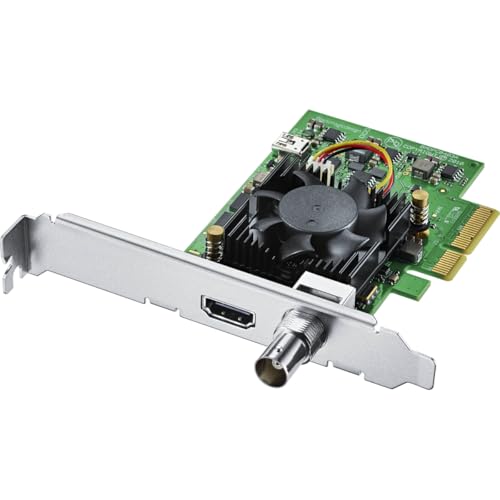
- 10-bit SD, HD, and Ultra HD SDI input
- HDMI 2.0a input included
- Up to 16 channels of embedded SDI audio
Best For: Desktop SDI and HDMI capture setups
Best Thunderbolt 4 Recorder

- 12G-SDI and HDMI inputs
- Supports UHD 4K60
- Thunderbolt 4 output and broad software support
Best For: Modern computer-based 4K60 capture
Best Compact HD Capture Card

- SDI capture for personal computers
- 16 channels of embedded SDI audio
- Compact card with low-profile bracket
Best For: Compact desktop SDI capture in SD and HD
HDR Monitoring Pick – Blackmagic Video Assist 5" 12G HDR
The Blackmagic Design Video Assist is a practical choice among camera external recorders with SDI input when you need a bright on-camera display alongside SDI and HDMI connectivity. Its 12G-SDI input/output, HDR support, and embedded audio handling suit professional production and monitoring setups.
Best For: Professional crews needing a bright HDR monitor with SDI recording and monitoring connections.
Pros:
- 2500-nit screen helps with bright shooting environments.
- 12G-SDI and HDMI 2.0a video input/output provide flexible connectivity.
- Supports embedded audio through SDI and HDMI.
- Includes HDR capability and a durable build.
Cons:
- The supplied details describe a 5-inch model but also list a 7-inch screen specification, so buyers should verify the exact size.
- Recording media and codec details are not specified in the supplied information.
This is a strong fit when monitoring quality and professional SDI integration matter as much as external recording. Verify the display-size specification before purchasing.
Streaming Encoder Pick – Magewell Ultra Encode SDI Plus
The Magewell Ultra Encode SDI Plus stands out among camera external recorders with SDI input for users who need recording and live distribution in one compact device. It accepts SDI video up to 4K at 30 fps, records to internal or external storage, and supports several streaming protocols.
Best For: Live production, remote contribution, corporate AV, education, and other SDI-to-streaming workflows.
Pros:
- Encodes SDI video up to 4096×2160p30 using H.264 or H.265.
- Can stream and record simultaneously.
- Supports internal 128GB storage, USB storage, and network recording.
- Offers RTMP, RTMPS, SRT, NDI|HX, HLS, and TS over UDP/RTP.
Cons:
- It is an encoder-focused device rather than a traditional camera monitor.
- 4G/5G USB modems are supported but are not supplied.
- Its broad feature set may be more than needed for simple local recording.
Choose this Magewell when your workflow extends beyond capture to network delivery, scheduled recording, or IP production. Its standalone design reduces the need for a computer in many deployments.
Rackmount Recorder Pick – HyperDeck Studio 4K Pro
The Blackmagic HyperDeck Studio 4K Pro is a rack-oriented option for camera external recorders with SDI input, combining 12G-SDI capture with HDMI 2.0 and multiple recording-media choices. It is designed for file-based production workflows and supports professional connections such as timecode, reference, and RS-422 control.
Best For: Broadcast racks, studio production, switcher environments, and editors using ProRes, DNxHD, H.264, or H.265 media.
Pros:
- Includes 12G-SDI input, loop output, and additional SDI outputs.
- Records to SD cards, UHS-II cards, and two 2.5-inch SSD slots.
- Supports ProRes, DNxHD, uncompressed, H.264, and H.265 recording.
- Provides timecode, reference, RS-422, USB-C, and 10Gb Ethernet connectivity.
Cons:
- Its 1RU deck format is less portable than a field recorder.
- A power cord is not included according to the supplied notes.
- It weighs 7.9 pounds, which may be excessive for lightweight camera rigs.
This is the most suitable choice here for an installed or studio-based recording system where media flexibility and broadcast I/O take priority over compact size.
Budget Field Monitor Pick – FEELWORLD CUT6S 6" SDI Recorder
The FEELWORLD CUT6S is a compact field-monitor option among camera external recorders with SDI input. It records compatible video to a FAT32 USB flash drive in MP4 format while also providing a 6-inch 1080p touchscreen, 3G-SDI conversion, and monitoring tools for exposure and focus.
Best For: DSLR and small-camera crews needing portable SDI monitoring with basic USB recording.
Pros:
- Records compatible video up to 1080p30 to a USB flash drive.
- Provides 3G-SDI input and output with SDI-to-HDMI conversion.
- Offers a 6-inch 1920×1080 touchscreen.
- Includes waveform, vectorscope, RGB parade, and histogram tools.
Cons:
- Recording is limited to MP4 and requires a compatible FAT32 USB flash drive.
- The package does not include an NP-F battery.
- 3G-SDI is intended for HD workflows rather than 4K SDI recording.
The CUT6S makes sense for mobile operators who want a viewing monitor, SDI conversion, and straightforward USB recording in one relatively compact unit. Plan separately for battery power and recording media.
Studio Control Choice – HyperDeck Studio HD Plus
The Blackmagic Design HyperDeck Studio HD Plus is a studio-oriented option for camera external recorders with sdi input. It adds 6G-SDI connectivity, high-performance transport controls, front-panel monitoring, and fill-and-key output while supporting codecs up to 1080p60.
Best For: Studio setups needing physical transport controls, front-panel audio monitoring, and advanced SDI output options.
Pros:
- 6G-SDI connectivity with fill-and-key output
- Supports codecs up to 1080p60
- Supports ProRes and DNxHD up to 2160p30
- Includes front-panel headphones and speakers
Cons:
- Its studio-focused feature set may be more than needed for simple recording
- The supplied notes do not specify included media
The HD Plus is a strong fit when SDI flexibility and hands-on studio operation matter more than a compact, minimal recorder design.
Compact Monitoring Pick – Video Assist 3G 5-Inch
Blackmagic Design Video Assist 5'' 3G Portable Monitor, Recorder, Scope, and Viewfinder
Check Price On AmazonThe Blackmagic Design Video Assist 3G combines a 5-inch 1920×1080 touchscreen with recording and HDMI plus 3G-SDI inputs. For camera external recorders with sdi input, it offers a practical way to monitor, record, and review video on a compact display.
Best For: Shooters who want an integrated on-camera monitor and recorder with 3G-SDI input.
Pros:
- Records video up to 1080p60
- Includes HDMI and 3G-SDI video inputs
- 5-inch Full HD touchscreen display
- Supports 3D LUTs, HDR, professional scopes, and focus assist
Cons:
- Limited to 1080p recording according to the supplied notes
- Uses a single SDXC/SDHC memory card
- Its 5-inch screen may be small for group viewing
This model is a sensible choice when portability and monitoring tools are as important as SDI recording, especially for compact camera rigs.
Simple Studio Recorder – HyperDeck Studio HD Mini
The Blackmagic Design HyperDeck Studio HD Mini is a straightforward studio recorder for camera external recorders with sdi input. It provides 3G-SDI video input, SD card recording, and HDMI, USB, SDI, and RCA connectivity for compatible production equipment.
Best For: Studio users seeking a dedicated recorder with 3G-SDI input and SD card media support.
Pros:
- Includes 3G-SDI video input
- Records to SD cards
- Offers HDMI, USB, SDI, and RCA connectivity
- Includes a two-year warranty according to the supplied notes
Cons:
- The supplied notes do not list supported recording codecs or frame rates
- RCA is listed as the audio input, which may not suit every studio workflow
- Studio design is less portable than a compact monitor-recorder
The HD Mini keeps the setup focused on dedicated recording and broad physical connectivity, making it appropriate for fixed studio or production environments.
Best PCIe Capture Card – DeckLink Mini Recorder 4K
If you are comparing camera external recorders with SDI input for a desktop or workstation, the Blackmagic Design DeckLink Mini Recorder 4K is a PCIe capture card with 10-bit SD, HD, and Ultra HD SDI input. It also includes HDMI 2.0a input for flexible signal capture.
Best For: Desktop systems that need SDI or HDMI capture, including Ultra HD workflows.
Pros:
- Supports 10-bit SD, HD, and Ultra HD SDI video input.
- Includes HDMI 2.0a input alongside SDI.
- Captures up to 16 channels of embedded SDI audio in SD, HD, and Ultra HD.
- Uses a Gen 2 PCIe four-lane interface and fits four-, eight-, and 16-lane PCIe slots.
Cons:
- Requires a compatible computer with an available PCIe slot.
- It is an internal capture card rather than a standalone recorder.
The DeckLink Mini Recorder 4K is a practical choice when your setup is centered on a PCIe-equipped computer and you want both SDI and HDMI connectivity in one card.
Best Thunderbolt 4 Recorder – UltraStudio Mini Recorder 12G
For camera external recorders with SDI input that connect to a modern computer, the Blackmagic Design UltraStudio Mini Recorder 12G combines 12G-SDI and HDMI inputs with Thunderbolt 4 output. It supports common codecs through UHD 4K60 and works with software such as DaVinci Resolve, Wirecast, vMix, and OBS.
Best For: Computer-based UHD 4K60 capture using Thunderbolt 4 and SDI or HDMI sources.
Pros:
- Provides 12G-SDI and HDMI inputs.
- Supports common video codecs up to UHD 4K60.
- Works with DaVinci Resolve, Wirecast, vMix, and OBS.
- Offers uncompressed and compressed 10-bit 4:2:2 YUV and 4:4:4 RGB quality.
Cons:
- Requires a computer with Thunderbolt 4 connectivity.
- It is designed as a compact computer-connected capture device, not a standalone recorder.
Choose this model when Thunderbolt 4 connectivity and UHD 4K60 support matter more than a PCIe installation, particularly for software-based capture and streaming workflows.
Best Compact HD Capture Card – DeckLink Mini Recorder HD
If your camera external recorders with SDI input search is focused on a straightforward HD computer capture solution, the Blackmagic Design DeckLink Mini Recorder HD offers SDI connectivity in a compact PCIe card. It supports 16 channels of embedded SDI audio and includes a low-profile slot bracket.
Best For: Compact desktop systems handling SDI-based SD and HD video capture.
Pros:
- Provides SDI video connectivity for a personal computer.
- Supports 16 channels of embedded SDI audio in SD and HD.
- Compact design measures 5.25 by 5.25 by 1 inch.
- Includes a low-profile slot bracket.
Cons:
- It is an internal computer capture card, not a standalone external recorder.
- The supplied notes specify SDI support for SD and HD rather than Ultra HD.
The DeckLink Mini Recorder HD makes sense for buyers who need compact SDI capture and embedded audio support in a compatible desktop computer, without requiring an Ultra HD-oriented card.
How We Picked the Best Camera External Recorders with Sdi Input
We focused on devices that accept SDI signals and serve a practical recording, monitoring, encoding, or capture role. The selection spans 3G-SDI and 12G-SDI equipment, portable camera-top monitors, rack-friendly studio recorders, streaming hardware, and PCIe or Thunderbolt-style computer capture solutions.
We also considered resolution support, codec and media options, monitoring usability, input and output flexibility, power requirements, and how easily each product fits into a field or studio workflow. Because these products are not interchangeable, the best choice depends on whether you need an onboard recorder, a broadcast deck, a live-streaming encoder, or a computer interface.
Quick Comparison
| Best For | Look For | Typical Product Type |
|---|---|---|
| Camera-top recording and monitoring | Built-in screen, battery support, SDI loop-through, media recording | Video Assist or field monitor |
| Studio and broadcast playback | Rack integration, 4K support, professional I/O, reliable media handling | HyperDeck-style recorder |
| Live streaming and remote delivery | Protocol support, network control, encoding flexibility, PoE | Standalone SDI encoder |
| Computer-based capture | Host connection, software compatibility, PCIe or Thunderbolt bandwidth | DeckLink or UltraStudio capture device |
Key Buying Factors for Camera External Recorders with Sdi Input
SDI Standard and Resolution
Check whether your cameras and switchers use HD-SDI, 3G-SDI, 6G-SDI, or 12G-SDI. A 12G-SDI device can accommodate demanding single-link 4K signals, while a 3G-SDI recorder may be better suited to HD productions. Verify frame-rate and signal-format compatibility before buying.
Recording Format and Media
Some recorders capture to SD cards or external disks, while studio decks may use dedicated removable media or USB storage. Compare supported codecs, bit rates, file systems, and maximum card or drive capacities. For editing-heavy work, choose a format your NLE handles efficiently.
Monitoring and On-Set Controls
A built-in display, waveform, vectorscope, focus assistance, false color, and exposure tools can be more valuable than extra resolution when shooting in the field. Touch controls and a bright screen also matter if the recorder will be used outdoors.
Connectivity and Workflow
Look beyond the SDI input. HDMI, SDI loop-through, timecode, audio connections, Ethernet, USB, NDI, and computer interfaces may determine whether the device integrates cleanly with your existing setup. For streaming, confirm network protocols and upload requirements.
Power, Size, and Reliability
Portable units should support your preferred battery system and provide clear power information. Studio devices prioritize sustained operation, cooling, rack or desk placement, and dependable signal handling. Consider cable clearance and ventilation before installation.
Who Should Buy Which Camera External Recorders with Sdi Input?
Choose a field monitor-recorder if you need camera-top monitoring, exposure tools, and direct recording during production. These are generally the most flexible options for cinematographers and small crews.
Choose a studio recorder for broadcast playback, ingest, mastering, or a permanent production room. Prioritize the required SDI generation, media format, and rack or control-room compatibility.
Choose a standalone encoder when live streaming, network delivery, or NDI-style integration is more important than simply recording camera files.
Choose a computer capture device when your workflow runs through editing, streaming, presentation, or broadcast software on a workstation. Confirm operating-system, software, and bandwidth requirements first.