The right external recorder can make a studio filming setup more dependable, flexible, and easier to monitor. Whether you need a broadcast-style deck, a camera with built-in recording, or separate multitrack audio, the best choice depends on your workflow.
We’ve selected 10 options across video and audio recording, including professional Blackmagic Design decks, Canon and consumer 4K camcorders, and portable Tascam and Zoom recorders. Use the guide below to match features, connections, and recording formats to your production needs.
Best 10 Camera External Recorders for Studio Filming Picks for 2026
Professional 4K Deck

- 12G-SDI and HDMI 2.0 connectivity
- Records to SSD, SD, and UHS-II media
- Supports ProRes, DNxHD, and 10-bit 4:2:2
Best For: Advanced studio and broadcast recording workflows
Integrated 4K Camcorder

- UHD 4K recording with 20x optical zoom
- HDMI output for monitors or recorders
- Dual SD slots for long or redundant shoots
Best For: Interviews, events, and compact studio production
Compact HD Deck

- Supports HD codecs up to 1080p60
- Adds 6G-SDI and fill-and-key output
- Includes transport controls, headphones, and speaker
Best For: HD studio and broadcast production
Creator Camcorder Bundle

- 5K/20fps and 4K/60fps video modes
- Includes microphone, tripod, two batteries, and 32GB card
- Supports WiFi control, webcam use, and HD output
Best For: Beginner creators and small studio shoots
Studio-Ready Deck

- HDMI, USB, SDI, and RCA connectivity
- Records digital video to SD cards
- Two-year warranty included
Best For: Flexible studio recording setups
Solo Creator Camcorder
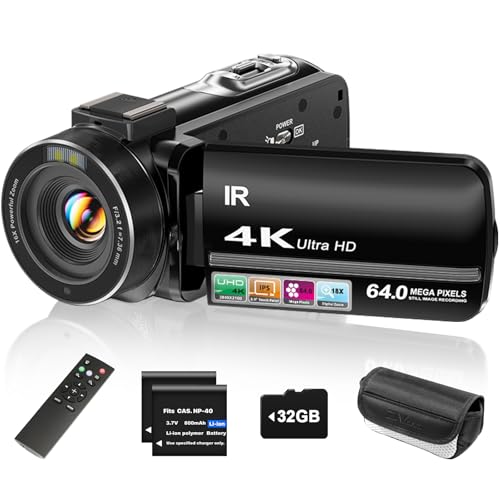
- 4K video and 64MP still capture
- 270-degree rotating touchscreen
- Includes card, two batteries, and remote
Best For: Vlogging, interviews, and presentations
Connectivity-Focused Recorder
HyperDeck Studio HD Mini Bundle
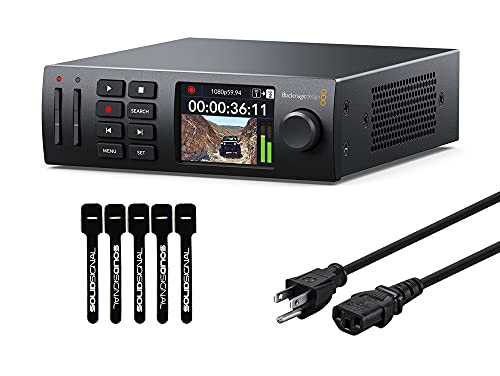
- Records H.264, ProRes, and DNxHD
- 3G-SDI, HDMI, USB-C, timecode, and reference
- Supports SD cards and external USB disks
Best For: SD/HD studio and streaming workflows
Compact Timecode Audio Hub

- 32-bit float recording helps prevent clipped audio.
- Dual XLR/TRS inputs plus a 3.5 mm input.
- Built-in timecode generation and synchronization.
Best For: Videographers building compact, synchronized audio rigs
All-in-One 4K Capture Station

- Records 4K video at 30fps.
- Captures up to four simultaneous audio tracks.
- Supports USB streaming and local SD recording.
Best For: Solo creators, musicians, and streamers
Professional DSLR Multitrack Recorder

- Records four mic inputs plus a stereo mix for six tracks.
- Includes timecode generation and jam-sync support.
- HDMI control helps coordinate camera and recorder operation.
Best For: Filmmakers using DSLR cameras and multiple microphones
Professional 4K Deck – HyperDeck Studio 4K Pro
For studio teams comparing camera external recorders for studio filming, the Blackmagic Design HyperDeck Studio 4K Pro is a feature-rich 1 RU deck built for Ultra HD workflows. It records to SD cards, UHS-II cards, or SSDs in formats including ProRes, DNxHD, H.264/H.265, and uncompressed video, with 10-bit 4:2:2 support.
Best For: Professional studios needing flexible media options, extensive SDI connectivity, timecode, reference, and RS-422 device control.
Pros:
- Supports 12G-SDI and HDMI 2.0 input and output.
- Offers two 2.5-inch SSD slots and two SD card slots.
- Includes front-panel controls, jog wheel, speaker, LCD, timecode, reference, and RS-422 connections.
- Works with popular editing and VFX software, plus select ATEM Advanced Panels.
Cons:
- Its rack-style feature set may be more than a small or simple studio requires.
- Power cord is not included.
- At 7.9 pounds, it is less portable than compact recorders.
This is the strongest option here for a dedicated studio rack or advanced broadcast setup. Its broad recording-format and connectivity support can simplify integration, but buyers should account for the missing power cord and appropriate storage media.
Integrated 4K Camcorder – Canon VIXIA HF G70 Bundle
The Canon VIXIA HF G70 is a 4K camcorder rather than a standalone deck, making it a practical camera-side choice among camera external recorders for studio filming. Its HDMI output can send clean 4K video to a monitor or recorder, while dual SD slots help support longer or redundant recording.
Best For: Interviews, events, school performances, and studio creators who want a complete 4K camera package with optical zoom and HDMI output.
Pros:
- Captures UHD 4K video with a DIGIC DV 6 processor and 1/2.3-inch CMOS sensor.
- 20x optical zoom supports flexible framing for events and interviews.
- Dual SD slots enable extended or redundant recording.
- Bundle includes a shoulder bag and 64GB memory card.
Cons:
- It is a camcorder, not a dedicated external recorder.
- Supplied video capture format is MP4.
- The 1/2.3-inch sensor is smaller than sensors used in many interchangeable-lens studio cameras.
Choose the HF G70 when you need the camera and recording features in one compact package. Its HDMI output adds recorder and monitoring flexibility, while the optical zoom and manual controls make it adaptable for presenter-led or event-style studio work.
Compact HD Deck – HyperDeck Studio HD Plus
The Blackmagic Design HyperDeck Studio HD Plus is a compact deck for buyers who need practical camera external recorders for studio filming without moving to the 4K Pro model. It supports codecs up to 1080p60, along with ProRes and DNxHD up to 2160p30, and adds 6G-SDI, front-panel headphones, speakers, and fill-and-key output.
Best For: HD studio and broadcast setups that need physical transport controls, monitoring features, and professional SDI connectivity.
Pros:
- Supports codecs up to 1080p60.
- Records ProRes and DNxHD up to 2160p30.
- Includes 6G-SDI and fill-and-key output.
- Provides front-panel headphones and speakers alongside high-performance transport controls.
Cons:
- Its supplied notes do not specify included recording media.
- It is focused on HD workflows rather than the broader Ultra HD feature set of the 4K Pro.
- Connectivity details are less extensive than those listed for the 4K Pro model.
This deck makes sense when your studio prioritizes reliable HD playback and recording controls over maximum 4K connectivity. The 6G-SDI and fill-and-key features are particularly useful in production environments that use professional video routing.
Creator Camcorder Bundle – Uytya X70 5K Video Camera
This Uytya X70 camcorder is a low-complexity creator option for camera external recorders for studio filming, with built-in recording and webcam support rather than a dedicated studio deck. It captures 5K video at 20fps or 4K at 60fps, includes WiFi and HD output, and comes with accessories aimed at vloggers, podcasters, and beginners.
Best For: Beginner YouTube creators, podcasts, interviews, and small studio shoots needing an all-in-one camera bundle.
Pros:
- Offers 5K/20fps and 4K/60fps video modes.
- Includes a 270-degree rotatable 3-inch touchscreen and built-in anti-shake.
- Bundle includes a 32GB card, two batteries, tripod, external microphone, remote, and lens hood.
- Supports WiFi control, webcam use, HD output, and recording while charging.
Cons:
- It is a consumer camcorder, not a dedicated external recorder.
- Its 5K mode is specified at 20fps.
- The listed zoom is digital rather than optical.
This bundle is convenient for creators who want to start filming immediately with minimal extra purchases. It is better suited to straightforward content production than to professional studio routing, but the included microphone, batteries, and webcam features add useful flexibility.
Studio-Ready Deck – HyperDeck Studio HD Mini
For studio teams comparing camera external recorders for studio filming, the Blackmagic Design HyperDeck Studio HD Mini offers a flexible recording deck with HDMI, USB, SDI, and RCA connectivity. It records to SD cards and supports compatible cameras including the Canon EOS R5, Sony A7S III, and Nikon Z6 II.
Best For: Studio setups that need a compact recorder with broad connectivity and dependable long-term use.
Pros:
- Supports HDMI, USB, SDI, and RCA connections.
- Records digital video to SD cards.
- Compatible with several popular mirrorless cameras.
- Includes a stated two-year warranty.
Cons:
- The supplied specifications do not identify supported recording codecs or maximum resolution.
- Software update support is unspecified.
Its mix of connection options and studio-recorder design makes it a practical choice when system flexibility matters more than a compact handheld form factor.
Solo Creator Camcorder – 4K 64MP Vlogging Camera
Although it is a camcorder rather than a standalone deck, this ZYDIIE model can complement camera external recorders for studio filming when you need an all-in-one capture option. It records 4K video, includes a 3-inch 270-degree rotating touchscreen, and connects by USB for webcam use.
Best For: Solo creators, vloggers, interviews, and presentations needing a ready-to-use camera package.
Pros:
- Records 4K video and captures 64MP still images.
- Rotating touchscreen helps with self-framing and varied angles.
- USB webcam function requires a single cable and no complex drivers.
- Includes a 32GB microSD card, two batteries, and a remote control.
Cons:
- Uses digital rather than optical zoom, with fixed focus listed in the specifications.
- USB is the listed connectivity option; dedicated SDI or HDMI recording connections are not specified.
- Digital image stabilization may be less suited to demanding studio motion work.
This is best viewed as a self-contained shooting solution for creators, not a conventional studio recorder for routing professional camera feeds.
Connectivity-Focused Recorder – HyperDeck Studio HD Mini Bundle
For camera external recorders for studio filming, this HyperDeck Studio HD Mini bundle combines a compact Blackmagic deck with a power cord and cable ties. It records H.264, ProRes, or DNxHD files to SD/UHS-II cards or external USB disks, with 3G-SDI, HDMI, timecode, and reference connections for SD and HD workflows.
Best For: Studio and streaming workflows that need codec flexibility, external media support, and professional signal connections.
Pros:
- Supports H.264, ProRes, and DNxHD recording in SD and HD formats up to 1080p60.
- Offers 3G-SDI input/output, HDMI output, USB-C, timecode, and reference connections.
- Can record to SD/UHS-II cards or external USB disks.
- Includes a 6-foot power cord and five cable ties.
Cons:
- Its stated recording capability tops out at 1080p60 rather than 4K.
- The bundle weighs 1.39 kg according to the supplied details.
- Audio input is listed as RCA, which may require adapters in some studio systems.
With its codec support, external-media options, and timecode/reference facilities, this bundle is the strongest fit here for structured SD/HD studio recording and live-production setups.
Compact Timecode Audio Hub – TASCAM FR-AV2
For camera external recorders for studio filming, the TASCAM FR-AV2 is a compact audio-focused option built for clean, flexible capture. Its dual XLR/TRS inputs, 32-bit float recording, and built-in timecode generation help simplify multi-device production setups.
Best For: Videographers who need reliable dual-input audio and synchronized timecode in a small recorder.
Pros:
- 32-bit float recording with dual ADCs supports no-clip audio capture.
- Dual XLR/TRS combo inputs use Ultra HDDA preamps, plus a 3.5 mm input.
- Built-in timecode generation and timecode IN/OUT reduce the need for a separate timecode device.
- Compact 9.5-ounce design is easy to include in a mobile or studio rig.
Cons:
- Wireless monitoring requires the optional AK-BT2 adapter.
- Runs on three AA batteries.
The FR-AV2 is a strong fit when studio filming calls for dependable external audio, quick setup, and accurate synchronization without adding a standalone timecode box.
All-in-One 4K Capture Station – Zoom Q8n-4K
The Zoom Q8n-4K combines video and audio in one device, making it a practical choice among camera external recorders for studio filming. It records 4K video at 30fps while capturing up to four simultaneous audio tracks and supporting live USB streaming.
Best For: Musicians, streamers, and solo filmmakers who want 4K video, multi-source audio, and local recording in one unit.
Pros:
- Records 4K video at 30fps with a 150° wide-angle lens and five field-of-view settings.
- Two XLR inputs with phantom power support microphones, instruments, or mixer feeds.
- Captures up to four audio tracks and records locally to SD cards up to 512GB.
- Can stream over USB while recording locally, with a flip-out screen and remote-control app.
Cons:
- Its wide-angle lens and fixed 2.8 aperture may not suit every studio framing setup.
- Only two XLR inputs are provided, despite four-track audio recording.
Choose the Q8n-4K when convenience matters more than assembling separate camera and audio components. Its integrated workflow is especially useful for performers and creators managing shoots alone.
Professional DSLR Multitrack Recorder – TASCAM DR-701D
The TASCAM DR-701D is designed for filmmakers who need a dedicated external audio recorder alongside a DSLR camera. It offers four individually recordable mic inputs, six-track recording, HDMI camera control, and timecode features for more coordinated studio or location workflows.
Best For: Professional filmmakers and production teams recording multiple microphones with DSLR video.
Pros:
- Four microphone inputs can be recorded individually and mixed to a stereo track for six-track recording.
- Built-in timecode generator can be jam-synced from a camera, SMPTE generator, or smart slate.
- HDMI input and output can allow the camera to start recording both devices, while video clock helps prevent drift.
- Top and bottom tripod mounts support camera-rig or standalone placement.
Cons:
- Its listed battery life is approximately 3.75 hours on four AA batteries.
- At 2 pounds, it is heavier than the FR-AV2.
- The supplied warranty description is 90 days labor and one year parts.
The DR-701D is the most production-oriented option here for DSLR-based shoots. Its multitrack inputs, HDMI integration, and synchronization tools make it well suited to complex audio capture.
How We Picked the Best Camera External Recorders for Studio Filming
We compared these products by looking at recording quality, supported media and formats, connection options, monitoring, audio capability, portability, and suitability for controlled studio environments. The selection includes dedicated video decks, complete camcorders, and audio recorders because “external recorder” can mean different things depending on whether your priority is video capture, clean sound, or both.
Professional studio users should pay particular attention to signal compatibility and workflow integration. A recorder is only useful if it accepts your camera’s output, records to media you can manage confidently, and fits your editing or livestreaming setup.
Quick Comparison
| Recorder type | Best suited to | Main advantage |
|---|---|---|
| Broadcast video deck | Studio cameras and production racks | Reliable monitoring, playback, and professional connectivity |
| 4K camcorder | Solo creators and straightforward shoots | Integrated lens, camera, and recording system |
| Portable audio recorder | Interviews, music, and DSLR or mirrorless setups | Dedicated preamps, multiple inputs, and flexible audio capture |
| Compact video recorder | Streaming, musicians, and small productions | Simple operation with a smaller footprint |
Key Buying Factors for Camera External Recorders for Studio Filming
Video Format and Signal Support
Confirm the recorder supports your camera’s resolution, frame rate, color format, and output connection. HDMI is common in smaller setups, while SDI is generally preferred for longer cable runs and professional studio systems. Check whether the unit records internally, passes the signal through, or both.
Storage and Recording Media
Consider whether you need SD cards, solid-state drives, or removable media designed for sustained high-bitrate recording. Storage capacity matters, but sustained write speed and media compatibility are just as important for avoiding dropped frames or interrupted takes.
Audio Inputs and Synchronization
For dialogue and multi-source productions, look for balanced XLR inputs, phantom power, timecode support, and reliable headphone monitoring. A dedicated audio recorder can produce cleaner results than relying on a camera’s built-in microphone or basic input.
Monitoring and Studio Integration
Bright displays, waveform or audio meters, loop-through outputs, and remote or rack-friendly controls can significantly improve daily operation. Also verify power requirements, cooling, and whether the recorder fits your existing monitor, switcher, or editing workflow.
Who Should Buy Which Camera External Recorders for Studio Filming?
Choose a Blackmagic Design HyperDeck if you need a studio-oriented video deck with professional connections, dependable media handling, and integration with a larger production system.
Choose the Canon VIXIA or a compact 4K camcorder if you want an all-in-one camera with a built-in lens and minimal setup. These are practical for presenters, classrooms, interviews, and creators who value simplicity.
Choose a Zoom Q8n-4K if you need an easy video-and-audio solution for musicians, streamers, or small productions. Choose a Tascam FR-AV2 or DR-701D when high-quality standalone audio, multiple inputs, or camera-synchronized sound is the priority.