The best camera external recorders with HDMI input can turn a camera, console, or legacy video source into a more capable recording setup. Depending on the model, you can record without a computer, capture 4K footage, stream through USB, or monitor video on an integrated display.
We compared 10 options across standalone recorders, compact capture cards, multi-input systems, and professional hardware to help you choose the right balance of resolution, frame rate, portability, connectivity, and ease of use.
Best 10 Camera External Recorders with Hdmi Input Picks for 2026
Best Standalone HD Recorder
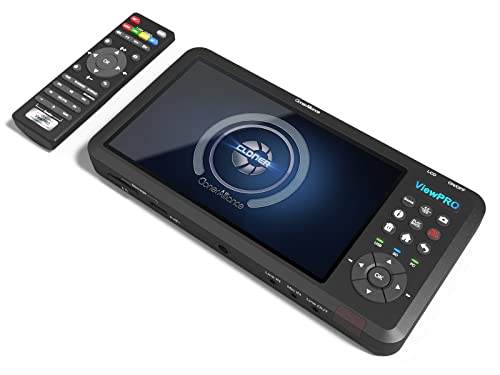
- 1080p60 recording with 4K30 input support
- 7-inch LCD enables TV-free preview and playback
- HDMI, AV, VGA, and YPbPr inputs
Best For: Portable standalone recording and analog-video conversion
Best Pro 4K60 Interface
Blackmagic UltraStudio Mini Recorder 12G

- HDMI and 12G-SDI inputs
- Supports UHD 4K60 video
- Thunderbolt 4 computer output
Best For: Professional computer-based capture and streaming
Best 4K Capture Box
SoundBeast 5-Inch HDMI Recorder

- 4K30 or 1080p60 HDMI capture
- 5-inch preview LCD with built-in speaker
- Captures HDMI and legacy analog sources
Best For: Mixed HDMI capture and VHS or camcorder conversion
Best 4K Standalone Recorder

- Standalone recording up to 4K30
- 4K60 input and HDMI pass-through
- TF Card and USB storage support
Best For: PC-free HDMI recording with pass-through
Best Plug-and-Play Value

- Captures HDMI video up to 1080p
- USB 3.0 plug-and-play connection
- HDMI loop-out and microphone input
Best For: Camera streaming, gaming capture, and basic OBS recording
Best Standalone Recorder
4K60 Dual-Input Video Capture Box

- Two HDMI inputs support signals up to 4K60
- Built-in 7-inch preview screen
- Records to USB or SD at up to 1080p60
Best For: Multi-camera recording and computer-free preview workflows
Best Portable USB-C Option

- Captures up to 1080p60 over USB
- Compact, driver-free, and externally unpowered
- Includes USB-C adapter for mobile setups
Best For: Portable camera streaming and laptop-based recording
Standalone Archive Choice
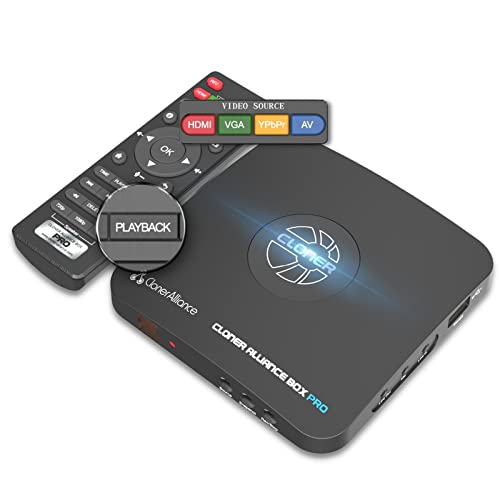
- Standalone 1080p60 recording to USB
- HDMI plus analog and VGA inputs
- Scheduled recording and TV playback
Best For: No-PC recording and digitizing mixed video sources
Portable USB Streaming Pick
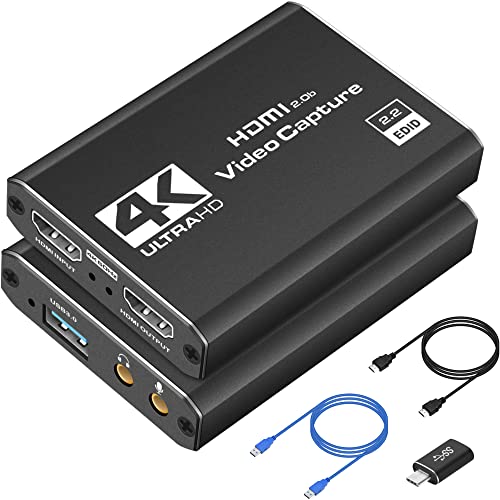
- 1080p60 capture over USB 3.0
- 4K HDMI input with loop-out
- Works with Windows, macOS, and major streaming software
Best For: Portable computer-based streaming and camera capture
Audio-Ready 4K Passthrough

- 1080p60 or 2K30 capture
- 4K60 HDMI passthrough
- Mic, audio, headphone, and speaker ports
Best For: Streaming setups needing flexible audio and low-latency monitoring
Best Standalone HD Recorder – ViewPro 7-Inch HDMI Recorder
If you want camera external recorders with hdmi input that can work without a TV or computer, the ViewPro combines 1080p recording with a built-in 7-inch display. It can capture HDMI sources at up to 1080p60, accept 4K30 input, and save MP4 files to USB storage or an SD card.
Best For: Users who want a portable standalone recorder for DSLR, drone, console, analog-video conversion, and scheduled recording.
Pros:
- Records 1080p at 60fps and supports 4K30 input.
- Built-in 7-inch LCD and speaker allow preview and playback without a TV.
- Accepts HDMI, VGA, AV, and YPbPr sources for broader device compatibility.
- Includes schedule recording and Windows streaming support.
Cons:
- Does not support HDCP-protected content.
- Live streaming features are specified for Windows systems.
The ViewPro is a flexible choice when standalone operation and legacy-input support matter as much as HDMI capture. Its 1080p60 limit for recording makes it better suited to HD workflows than true 4K recording.
Best Pro 4K60 Interface – Blackmagic UltraStudio Mini Recorder 12G
For camera external recorders with hdmi input aimed at a computer-based production setup, the Blackmagic Design UltraStudio Mini Recorder 12G provides HDMI and 12G-SDI connectivity with support for video up to UHD 4K60. Its Thunderbolt 4 output is designed to feed a computer and professional software.
Best For: Video creators and production users working with DaVinci Resolve, Wirecast, vMix, OBS, or similar computer-based workflows.
Pros:
- Supports HDMI and 12G-SDI inputs.
- Handles common codecs up to UHD 4K60.
- Works with several popular video-production and streaming applications.
- Supports uncompressed and compressed 10-bit 4:2:2 YUV and 4:4:4 RGB quality.
Cons:
- Requires a computer connection through Thunderbolt 4 rather than standalone recording.
- The supplied notes do not list an onboard display or storage.
This is the most production-focused option in the group, particularly for users who need SDI alongside HDMI and high-quality 4K60 capture. Choose it when your workflow already includes a compatible computer and software.
Best 4K Capture Box – SoundBeast 5-Inch HDMI Recorder
The SoundBeast 4K capture box is a practical option among camera external recorders with hdmi input, offering 4K30 or 1080p60 HDMI capture plus a built-in 5-inch preview screen. It also handles standard-definition analog sources, making it useful for both modern cameras and older video equipment.
Best For: Buyers who need HDMI capture, analog tape or disc conversion, and simple standalone preview in one compact unit.
Pros:
- Captures HDMI video up to 4K30 or 1080p60 with audio.
- Supports AV, VHS, VCR, DVD, camcorder, Hi8, and MiniDV sources up to 480p.
- Records MP4 files to a memory card, USB flash drive, or USB hard drive.
- Includes a 5-inch LCD, speaker, remote, cables, and a two-year warranty.
Cons:
- HDCP or copyrighted HDMI sources produce a black screen and are not supported.
- USB live streaming is limited to Windows with OBS; Mac and XSplit are not supported.
- Storage media is not included.
With its broad source compatibility and included accessories, the SoundBeast is well suited to mixed-format capture projects. Its main limitation is the Windows-focused streaming support, so check your computer workflow before buying.
Best 4K Standalone Recorder – ZowieREC HDMI Video Recorder
The ZowieREC is a compact choice for camera external recorders with hdmi input when you want standalone 4K recording and HDMI pass-through. It records without a PC, supports TF Card or USB storage, and can downconvert higher-resolution input to 1080p60 recording.
Best For: Users recording gameplay, camera footage, conferencing, or other HDMI sources while monitoring on a connected TV or display.
Pros:
- Records up to 4K30 without a PC.
- Supports 4Kp60 and 1080p120 input with HDMI pass-through, plus 1080p60 recording.
- Offers TF Card and USB storage options.
- Includes pause, resume, snapshot, playback, and schedule-recording features.
Cons:
- Protected or copyrighted HDMI sources are not supported.
- An AV-to-HDMI adapter is not included.
- The supplied package lists a Type-C power adapter and cable but no storage media.
The ZowieREC stands out for combining standalone 4K recording with pass-through and scheduling in a compact aluminum design. It is a strong fit for HDMI-only setups, but users with analog sources will need a separate converter.
Best Plug-and-Play Value – 1080p HDMI Capture Card
For shoppers comparing camera external recorders with hdmi input, this compact capture card is a straightforward option for sending HDMI video to a Windows or Mac computer. It captures up to 1080p and connects through USB 3.0 without requiring drivers or an external power supply.
Best For: Camera streaming, gaming capture, and basic recording setups that use a computer and software such as OBS.
Pros:
- Supports HDMI input up to 4K30/60Hz while capturing up to 1080p.
- USB 3.0 connection provides low-latency capture and HDMI loop-out for gameplay monitoring.
- Plug-and-play design includes microphone input for commentary.
Cons:
- Capture output is limited to 1080p, with output support up to 2K30Hz.
- Requires a USB 3.0 port and a computer capable of processing 1080p video.
- Microphone input accepts only a 3.5mm TRS standard microphone headset.
This is a practical budget-friendly choice when 1080p capture is sufficient. HDMI loop-out and microphone support make it more useful for live streaming than a basic HDMI-to-USB adapter, but it is not intended for 4K capture output.
Best Standalone Recorder – 4K60 Dual-Input Video Capture Box
Among camera external recorders with hdmi input, this model stands out as a more complete standalone unit. It accepts two HDMI sources, includes a built-in 7-inch screen, and can record to USB storage or an SD card while also connecting to a computer for streaming.
Best For: Multi-source camera recording, live production, and users who want preview and storage without relying entirely on a computer.
Pros:
- Offers two HDMI inputs with support for input signals up to 4K60.
- Includes PIP, POP, and PMP multi-screen modes for managing sources.
- Built-in 7-inch display, USB/SD recording, and Windows, Mac, and Linux compatibility.
- Can use included mains power or compatible F550, F750, or F970 batteries.
Cons:
- Outputs and records at up to 1080p 60fps rather than 4K.
- USB flash drives, hard drives, SD cards, and batteries are not included.
- Does not record, display, or stream copyrighted or content-protected HDMI sources.
The UR500 is the strongest fit here for creators who need two HDMI inputs and on-device operation. Its 1080p recording limit matters, but the screen, source-combining modes, and removable-storage workflow add flexibility for camera and event setups.
Best Portable USB-C Option – 1080p60 HDMI Capture Card
This portable capture card is a convenient pick for camera external recorders with hdmi input when the recording destination is a laptop, tablet, or other USB-equipped computer. It accepts HDMI input up to 4K30 and sends up to 1080p60 or 2K30 to capture software.
Best For: Mobile streaming, online meetings, camera recording, and users who need both USB 3.0 and USB-C connectivity.
Pros:
- Supports up to 1080p60 output for smooth capture and up to 4K30 HDMI input.
- Works with Windows, Mac, Linux, Android, OBS, Zoom, and common streaming platforms.
- Compact aluminum design requires no external power or additional drivers.
- Includes a USB 3.0-to-USB-C adapter for broader device compatibility.
Cons:
- Designed for capture software and cannot directly cast to a monitor or TV.
- It is a one-way HDMI-to-USB device; USB-C-to-HDMI conversion may cause signal loss.
- Using an adapter may result in USB 2.0 recognition unless the connection is oriented correctly.
This is a sensible travel-friendly choice for creators who record into software rather than a standalone recorder. Its 1080p60 output and USB-C flexibility are useful, though users should verify a USB 3.0 connection and configure audio in their capture software.
Standalone Archive Choice – ClonerAlliance Box Pro
For shoppers comparing camera external recorders with HDMI input, the ClonerAlliance Box Pro stands out as a standalone option that can record to USB storage without a computer. It supports HDMI along with RCA, composite, component, and VGA sources, recording up to 1080p at 60fps.
Best For: Users who want no-PC recording, analog-to-digital conversion, scheduled recording, or TV playback.
Pros:
- Records MP4 video directly to USB storage without a PC.
- Supports HDMI, RCA, composite, component/YPbPr, and VGA inputs.
- Includes passthrough, scheduled recording, remote-controlled playback, and low stated latency.
- Works with cameras, camcorders, game consoles, DVRs, and other supported video sources.
Cons:
- Maximum capture resolution is 1080p.
- Included editing and conversion software is for Windows only.
- Does not support HDCP-protected content.
The Box Pro is a flexible choice when standalone operation matters more than 4K capture. Its broad input selection also makes it useful for mixed modern and legacy video setups.
Portable USB Streaming Pick – Dcyfol 4K HDMI Capture Card
This Dcyfol model is a compact choice among camera external recorders with HDMI input for computer-based streaming and recording. It captures at up to 1080p 60fps, accepts 4K HDMI input for preview, and connects through USB 3.0 to Windows or Mac systems.
Best For: Gamers, camera users, and creators who need portable HDMI capture for OBS, Streamlabs, XSplit, or similar software.
Pros:
- Supports 1080p 60fps capture from HDMI sources.
- Accepts 4K HDMI input and provides HDMI loop-out for passthrough.
- Works with cameras, PS5, Xbox, Nintendo Switch, PCs, Windows, and macOS.
- Plug-and-play USB design includes useful cable and adapter accessories.
Cons:
- Requires a computer with a USB 3.0 port for capture and recording.
- Although it accepts 4K input, the listed capture output is 1080p at 60fps.
- Warranty information is listed as one year.
Choose this capture card if your workflow centers on a laptop or desktop and you value a small, simple setup. It is better suited to software-based streaming than standalone recording.
Audio-Ready 4K Passthrough – Guermok GM-34A Capture Card
The Guermok GM-34A combines HDMI capture with 4K60 passthrough, making it a strong option among camera external recorders with HDMI input for responsive monitoring. It captures up to 1080p at 60fps or 2K at 30fps and connects to a computer through USB 3.0.
Best For: Streamers and creators who need high-resolution passthrough plus flexible microphone, audio, and headphone connections.
Pros:
- Captures up to 1080p60 or 2K30, with HDMI input up to 4K60.
- Provides 4K HDMI loop-out for real-time external display monitoring.
- Includes mic input, audio input, headphone monitoring, and speaker output ports.
- Works with OBS, Streamlabs, VLC, XSplit, Zoom, Teams, cameras, consoles, Windows, and macOS.
Cons:
- Requires capture software and a computer for display and recording.
- USB 3.0 bandwidth and software settings can affect supported capture formats.
- The microphone input supports standard 3.5mm TRS microphones, not USB or some TRRS headset microphones.
The GM-34A is the most audio-focused option here, while its 4K passthrough helps preserve a smooth monitoring experience. Confirm your microphone type and computer ports before buying.
How We Picked These Camera External Recorders with Hdmi Input
We focused on how each device fits real recording and production workflows rather than judging specifications in isolation. Our comparison considered supported input resolutions and frame rates, recording destinations, USB connectivity, onboard displays, audio handling, compatibility with cameras and computers, and whether a PC is required.
We also included several product types: standalone HDMI recorders for computer-free use, USB capture cards for streaming and software recording, multi-input units for live production, and professional interfaces for dependable camera-to-computer capture. Features such as scheduled recording, playback, picture-in-picture modes, legacy AV inputs, and content-protection limitations were considered where relevant.
Quick Comparison
- Best for standalone recording: Choose a recorder with storage support, direct playback, and no-PC operation.
- Best for streaming: Select a USB 3.0 capture device that supports your camera’s output and works with software such as OBS or your preferred platform.
- Best for 4K workflows: Look for 4K input pass-through or recording, while checking whether the device records 4K or only outputs it while capturing at 1080p.
- Best for multiple sources: A two-channel HDMI recorder with PIP, POP, or PMP modes is more suitable for switching or comparing feeds.
- Best for older equipment: Models with AV, VGA, YPbPr, or composite inputs can digitize more than modern HDMI-only devices.
Key Buying Factors
Resolution, Frame Rate, and Pass-Through
Confirm the difference between input support, recording resolution, and pass-through resolution. A device may accept a 4K signal but save video at 1080p. For smooth motion, check for 1080p at 60 frames per second; for cinema cameras or high-resolution sources, verify the exact 4K frame rates supported.
Standalone Recording or USB Capture
Standalone units are useful when you want to record to a memory card or drive without a laptop. USB capture cards are usually smaller and better for software-based streaming, but they depend on a computer and compatible drivers. Decide which workflow you use most before prioritizing portability or price.
Inputs, Audio, and Compatibility
HDMI is not automatically universal. Check full-size versus micro or mini HDMI requirements, audio support, HDCP limitations, and compatibility with your camera’s clean HDMI output. Content-protected sources generally cannot be captured legally or technically by consumer capture devices.
Monitoring and Controls
An integrated screen can simplify field recording and playback, while scheduled recording and physical controls are valuable for unattended use. If you already have a reliable monitor, a smaller capture card may offer better value.
Who Should Buy Which Camera External Recorders with Hdmi Input?
Choose a standalone recorder if you need computer-free operation, direct playback, or scheduled recording. Choose a USB capture card for live streaming, video calls, tutorials, and camera recording inside desktop software. Choose a professional interface when consistent computer connectivity and established production hardware matter more than standalone features. Choose a multi-input recorder for presentations, gaming setups, studio feeds, or workflows that require multiple HDMI sources and picture-in-picture layouts.
Before buying, match the recorder to the camera’s actual HDMI output, desired recording format, storage method, and available power. That check prevents the most common compatibility problems and helps ensure the device supports the workflow you intend to build.