Digitizing 35mm negatives can preserve family photos, simplify sharing, and make old film easier to organize. The right scanner depends on more than advertised megapixels: workflow, display quality, format support, and file handling all matter.
We compared 10 popular options, from compact phone-based digitizers to standalone scanners with built-in screens and broad format compatibility, to help you choose a practical fit for your archive.
Best 10 Film Scanner for 35mm Negatives Picks for 2026
Best All-in-One Option
Magnasonic FS71 24MP Film Scanner

- Scans 35mm and several other film formats
- Works without a computer and saves to SD cards
- Includes a 5-inch display and HDMI viewing
Best For: Mixed film collections and quick home archiving
Best for Easy Viewing

- Features a large tiltable 7-inch LCD
- Uses a continuous quick-feeding tray
- Supports 135mm, 110mm, and 126mm film
Best For: Simple home scanning with large on-device previews
Best Phone-Based Choice

- Uses a smartphone camera for capture
- Supports 35mm and 120 film
- Includes adjustable backlight and wireless remote
Best For: Phone users digitizing mixed-format negatives
Best Compact KODAK Option
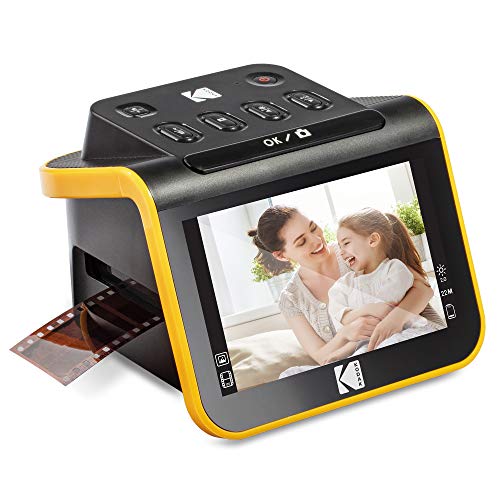
- Captures scans at up to 22MP
- Includes adapters for common film formats
- Provides a 5-inch LCD and one-touch editing
Best For: Straightforward home digitizing of negatives and slides
Best Camera-Based Option
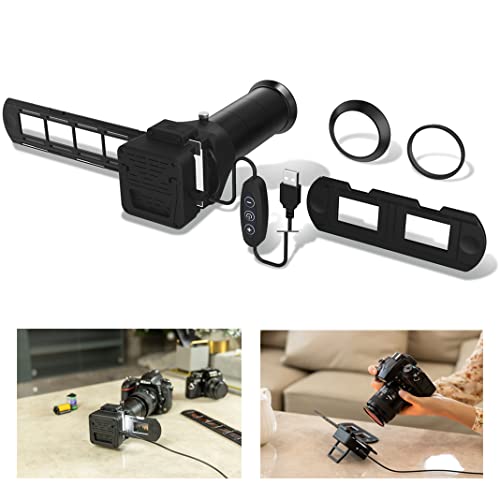
- Uses compatible macro lenses for camera-based capture
- 10-level, 6500K CRI 95+ LED backlight
- Handles 35mm strips and mounted slides
Best For: Photographers with a compatible macro lens
Best Multi-Format Standalone Pick
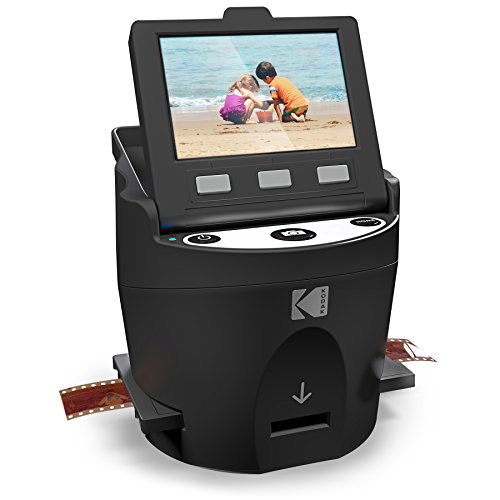
- Scans 35mm and four additional listed formats
- 3.5-inch adjustable LCD display
- Saves scans as JPEG files with one-touch controls
Best For: Users with mixed film and slide collections
Best Simple 35mm Workflow

- Scans 35mm film and slides at listed 1800 dpi
- Saves JPEGs to SD card or computer
- Includes rapid slide feeder and 2.4-inch LCD
Best For: Straightforward home 35mm digitizing
Best Compact Pick
ClearScan MINI 16MP Film Scanner

- 16MP CMOS scanning for 35mm, 126, and 135 film
- Compact body with front-facing controls
- Direct SD-card saving and built-in image adjustments
Best For: Portable, beginner-friendly film digitizing
Best Large-Screen Value
DigitConvert Slide & Negative Scanner

- 5-inch LCD for previewing and Gallery Mode
- Supports several negative and slide formats
- Includes adapters, HDMI cable, and 36-month warranty
Best For: Easy scanning and family photo viewing
Best High-Resolution Pick
ClearScan P7 24MP Film Scanner

- 24MP CMOS sensor with a 7-inch LCD
- Supports 35mm, 110, 126, Super 8, and 8mm formats
- Includes an SD card and adjustable image sizing
Best For: Large collections and detailed on-device previews
Best All-in-One Option – Magnasonic FS71 24MP Film Scanner
The Magnasonic FS71 is a practical film scanner for 35mm negatives when you want fast, computer-free digitizing. It also supports 110, 126, Super 8 film, and several slide formats, while its 5-inch display lets you preview images directly.
Best For: Families digitizing mixed film and slide collections with minimal setup.
Pros:
- Scans 35mm negatives in under five seconds per image.
- Supports multiple film and slide formats, including Super 8.
- Offers 24MP files, built-in adjustments, and SD-card storage up to 128GB.
- Includes a 5-inch screen and HDMI output for viewing on a larger display.
Cons:
- SD card and HDMI cable are not included.
- Requires Windows 7 or later for computer use.
Choose this model if speed, format flexibility, and standalone operation matter more than advanced computer-based scanning controls.
Best for Easy Viewing – KODAK Slide N Scan Max
The KODAK Slide N Scan Max is a convenient film scanner for 35mm negatives with a large tiltable 7-inch LCD. Its quick-feeding tray and direct SD-card saving are useful for creating a digital archive without keeping a computer connected.
Best For: Users who want a large preview screen and a straightforward scanning workflow.
Pros:
- 7-inch tiltable LCD also works as a digital picture frame.
- Quick-feeding tray supports continuous scanning.
- Handles 135mm, 110mm, and 126mm film formats.
- Offers one-touch editing and SD/SDHC support up to 32GB.
Cons:
- SD card is not included.
- Its listed SD capacity is limited to 32GB.
- Computer use requires Windows 7 or later.
This is a strong fit for casual home archiving, especially if easy previews and simple controls are higher priorities than extensive format support.
Best Phone-Based Choice – JJC Mobile Film Digitizer
The JJC Mobile Film Digitizer takes a different approach to scanning 35mm negatives: it uses your smartphone camera rather than a standalone scanner. It includes an adjustable LED backlight, holders for 35mm and 120 film, and a wireless remote for hands-free capture.
Best For: Smartphone users who want to digitize both 35mm and medium-format negatives.
Pros:
- Supports 35mm and 120 medium-format film.
- Adjustable LED brightness offers 11 light-output levels.
- Universal phone clamp fits phones approximately 2.2 to 3.5 inches wide.
- Metal base, anti-slip pads, and wireless remote promote stable capture.
Cons:
- Requires a smartphone camera and a separate app for conversion.
- No software is included.
- Listed resolution is 1080p rather than a dedicated scanner megapixel rating.
This option makes sense if you already have a capable phone and value format flexibility, but it involves more setup and app-based processing than a standalone unit.
Best Compact KODAK Option – KODAK Slide N Scan 22MP
The KODAK Slide N Scan is a compact film scanner for 35mm negatives that combines a 22MP capture resolution with a 5-inch LCD. Its quick-feeding tray, included adapters, and direct SD-card saving make it suited to straightforward home digitizing.
Best For: Users scanning common negative and slide formats who want simple on-device editing.
Pros:
- Supports 135, 110, and 126 negatives plus 50mm slides.
- Includes film adapters, a cleaning brush, USB cable, and HDMI cable.
- 5-inch LCD provides preview, editing, and gallery functionality.
- Offers one-touch scanning with color, brightness, date, and time adjustments.
Cons:
- SD or SDHC card is not included.
- Storage support is limited to cards up to 32GB.
- Computer use requires Windows 7 or later.
Consider this model for a balanced, compact setup with useful included accessories and simple controls for common family-film formats.
Best Camera-Based Option – JJC 35mm Film Digitizer
If you already own a compatible macro lens, this JJC kit offers a flexible way to digitize 35mm negatives and mounted slides. It uses your camera for capture and includes a 6500K, CRI 95+ LED backlight with 10 brightness levels for controlled illumination.
Best For: Camera owners with compatible Canon, Nikon, Sony, or Olympus macro lenses who want a camera-based film scanner for 35mm negatives.
Pros:
- Supports 35mm film strips and mounted slides.
- Includes seven lens adapters for select Canon, Nikon, and Sony macro lenses.
- Built-in LED backlight offers 10 brightness levels.
- View-angle and tilt adjustment ring helps fine-tune framing.
Cons:
- Requires a compatible camera and macro lens.
- Manual focusing and camera-based setup may take more effort than a standalone scanner.
- Incandescent light sources require specific distance and usage precautions.
The JJC is the most adaptable choice here for photographers who already have the required camera gear. Its adjustable, high-CRI lighting and lens compatibility can support a more controlled digitizing workflow, but it is not an all-in-one scanner.
Best Multi-Format Standalone Pick – KODAK SCANZA Film Scanner
The KODAK SCANZA is a standalone film scanner for 35mm negatives that also accommodates several other formats. It converts supported negatives and slides to JPEG files, with a bright 3.5-inch LCD and included inserts for convenient scanning without relying on a separate camera.
Best For: Families and hobbyists digitizing mixed collections of 35mm, 126, 110, Super 8, and 8mm film.
Pros:
- Supports 35mm, 126, 110, Super 8, and 8mm negatives and slides.
- Includes multiple film inserts and adapters.
- Built-in 3.5-inch TFT LCD has adjustable brightness and tilt.
- Offers one-touch scanning, JPEG output, and image adjustments.
Cons:
- SD card is not included.
- Limited to the listed supported film formats.
- Its workflow is oriented toward JPEG files rather than camera-based capture.
For a varied film archive, the SCANZA stands out for its format support and self-contained controls. The large display and included accessories make it approachable, while the lack of an included SD card is a small extra purchase to plan for.
Best Simple 35mm Workflow – DIGITNOW! 135 Film Scanner
The DIGITNOW! 135 is a compact film scanner for 35mm negatives and slides that saves JPEG files to an SD card or computer. Its standalone design, adjustable slide feeder, and built-in display make it a practical option for straightforward home digitizing.
Best For: Users who want a compact 35mm scanner with SD-card saving and no required scanning software.
Pros:
- Scans 35mm film and slides at listed 1800 dpi resolution.
- Can save JPEG files to an SDHC card or computer.
- Includes an adjustable rapid slide feeder and slide mounts.
- Works with Windows XP through Windows 10 and Mac OS.
Cons:
- SD-card support is limited to up to 32GB SDHC.
- Uses a smaller 2.4-inch TFT LCD than the KODAK SCANZA.
- Listed compatibility focuses on 35mm film and slides rather than multiple film formats.
The DIGITNOW! emphasizes convenience over broad format support, making it a sensible fit for a mostly 35mm collection. Its SD-card workflow and no-computer-required operation can simplify batch digitizing, while the smaller display and lower listed resolution may matter to users prioritizing detail and preview size.
Best Compact Pick – ClearScan MINI 16MP Film Scanner
If you want a compact film scanner for 35mm negatives, the BEONEGLOBAL ClearScan MINI offers straightforward scanning with a 16MP CMOS sensor and a built-in 2.31-inch LCD. It saves images directly to an SD card and includes basic on-device editing, so you can digitize photos without relying on complex software.
Best For: Beginners and families who want a lightweight, easy-to-carry scanner for 35mm, 126, and 135 film.
Pros:
- 16MP CMOS sensor with 24-bit color depth.
- Front-facing controls are positioned below the screen for comfortable operation.
- Built-in brightness, color, rotate, and flip adjustments.
- Compact design and direct SD-card saving.
Cons:
- SD card is not included.
- The 2.31-inch screen is smaller than the displays on the other listed models.
- Requires a compatible Windows or Mac system for computer use.
This is a practical choice when portability and simple controls matter more than a large preview screen or broader format support. Its 16MP resolution and built-in adjustments make it suitable for everyday home archiving.
Best Large-Screen Value – DigitConvert Slide & Negative Scanner
This film scanner for 35mm negatives combines one-touch operation with a large 5-inch LCD for previewing and editing. It converts supported negatives and slides to JPEG files, saves to an SD card, and includes HDMI output for viewing your digitized images on a television.
Best For: Users who want a large preview display, broad adapter support, and simple scanning without computer software.
Pros:
- 5-inch HD LCD with a wide viewing angle and Gallery Mode.
- Supports 135/110 negatives and 135/110/126/Super 8 slides.
- One-touch JPEG scanning with onboard color and brightness controls.
- Includes film adapters, HDMI cable, USB cable, cleaning brush, and a 36-month warranty.
Cons:
- Must remain connected to a power source during use.
- SD card is not included.
- The listed 1080P resolution may appeal less to users seeking the highest stated megapixel count.
Its large screen and bundled accessories make this a convenient all-in-one option for family archiving and group viewing. HDMI output is especially useful if you want to share scanned memories on a larger display.
Best High-Resolution Pick – ClearScan P7 24MP Film Scanner
For shoppers seeking a higher-resolution film scanner for 35mm negatives, the BEONEGLOBAL ClearScan P7 pairs a 24MP CMOS sensor with a large 7-inch LCD. It scans several film and slide formats, includes an SD card, and provides one-touch controls for reviewing, adjusting, and saving images without a computer.
Best For: Users who want a large display, higher stated scanning resolution, and support for multiple film formats.
Pros:
- 24MP CMOS sensor for detailed digital images.
- Large 7-inch LCD for clearer previews and browsing.
- Supports 35mm/135, 126, 110, Super 8, and 8mm film and slides.
- Includes an SD card and offers adjustable image sizing.
Cons:
- Its larger footprint is less portable than the MINI model.
- Only a one-year manufacturer warranty is listed.
- USB is the listed connection type, so the notes do not specify HDMI output.
The P7 is the strongest fit for shoppers prioritizing screen size and the highest stated resolution in this group. Its included SD card and broad format compatibility also make it convenient for larger film collections.
How We Picked the Best Film Scanner for 35mm Negatives
We focused on scanners that support standard 35mm film and offer a straightforward path from negative or slide to a digital image. Our comparison considers scanning resolution, image preview, supported formats, included holders, connection or storage options, and ease of use. We also looked at whether each model suits occasional home projects, larger collections, or users who want to digitize formats beyond 35mm.
Advertised megapixel counts are useful for comparing hardware, but they do not guarantee professional-quality scans. Consistent film positioning, even backlighting, clean optics, and effective color correction can have an equally noticeable effect on results.
Quick Comparison
| Best For | What to Look For |
|---|---|
| Simple home archiving | Built-in screen, one-touch controls, and SD-card storage |
| Large collections | Fast loading, broad format support, and a comfortable workflow |
| Travel or occasional use | Compact design, USB power, and minimal accessories |
| Phone-based scanning | Adjustable phone mount, bright backlight, and a suitable scanning app |
| Mixed film formats | Support for 35mm, 110, 126, 120, Super 8, or 8mm as needed |
Key Buying Factors for a Film Scanner for 35mm Negatives
Resolution and Image Quality
Choose a model with enough capture detail for your intended use. Lower-resolution scans can work well for social media and casual viewing, while higher-resolution capture gives you more flexibility for cropping, printing, and restoration. Check whether the stated resolution is optical or interpolated when specifications are available.
Film Holders and Format Compatibility
A secure holder helps keep frames aligned and reduces uneven borders. Confirm that the package supports your actual film type, particularly if you have mounted slides, 110 or 126 cartridges, 120 film, or movie film in addition to standard 35mm negatives.
Workflow and File Handling
Standalone scanners with LCD screens and SD-card storage are convenient because they do not require a computer. USB transfer can be useful for moving files directly to a laptop. Mobile digitizers are often inexpensive and portable, but results depend more heavily on phone camera quality, alignment, and the app used.
Color, Dust, and Exposure Controls
Look for adjustable brightness or exposure and software that can invert negatives and correct color. No compact scanner eliminates dust completely, so clean film carefully before scanning and expect to perform additional editing for archival-quality results.
Who Should Buy Which Film Scanner for 35mm Negatives?
Choose a standalone model with a built-in display if you want the simplest process for family archives or occasional scanning. A larger-screen option is especially useful when reviewing frames and navigating menus. Pick a compact scanner if storage space and portability matter more than advanced controls.
A phone-based JJC-style digitizer makes sense for buyers who already have a capable smartphone and want a low-cost, lightweight setup. It can be convenient for quick sharing, but a dedicated scanner is generally easier to keep consistent across a large collection.
If your archive includes several film formats, prioritize compatibility before maximum resolution. For the best results, scan in a clean, well-lit workspace, save the original files at the highest practical setting, and create backup copies before editing.