Preserving aging slides, negatives, and printed photographs is easier when you choose a scanner that matches your collection, workflow, and desired image quality. The best models range from simple no-computer converters to higher-resolution options with large preview screens.
Below, we compare 10 practical choices for digitizing family memories, from 35mm film and mounted slides to 4×6 prints and mixed-format archives.
Best 10 Slide Scanners for Old Photos Picks for 2026
Best All-in-One Option
Magnasonic FS71 24MP Film Scanner

- Supports multiple film and slide formats
- Scans in under five seconds per image
- 5-inch display with SD-card storage
Best For: Computer-free digitizing of mixed collections
Best for Easy Viewing

- Large 7-inch tiltable LCD
- Quick-feeding tray for continuous scanning
- Direct SD/SDHC storage up to 32GB
Best For: Simple home archiving with a large preview screen
Best for Printed Photos
Plustek ePhoto Z300 Photo Scanner

- Scans 4x6 photos in about two seconds
- Supports photos up to 8x10
- Includes tools for faded-image enhancement
Best For: Fast digitizing of printed photos and documents
Best for Format Variety
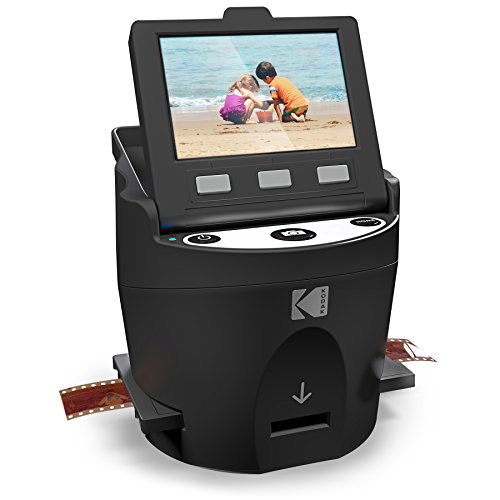
- Handles five listed legacy film formats
- Includes multiple inserts and adapters
- 3.5-inch LCD with included cables
Best For: Mixed collections of negatives and slides
Simple Standalone Choice
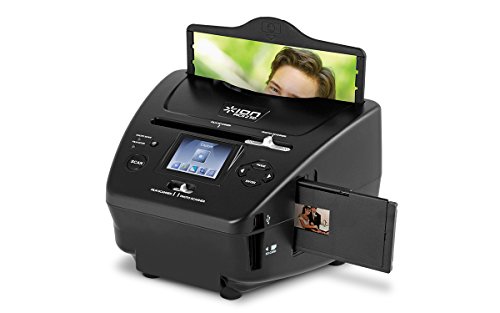
- Scans prints, slides, and negatives
- Saves directly to included SD card
- Supports up to 2500 DPI
Best For: Computer-free scanning of common prints and 35mm media
Large-Screen Film Digitizer
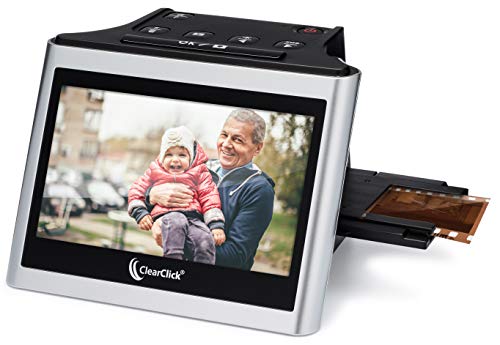
- Includes a 5-inch preview screen
- Supports 35mm, 110, and 126 film
- Offers up to 22MP interpolated scans
Best For: Standalone scanning with easy image preview
Versatile Format Support
KODAK SCANZA Film & Slide Scanner

- Supports five film formats
- Includes multiple adapters and inserts
- Features one-touch JPEG scanning
Best For: Digitizing varied film and slide collections
Best with Extra Features
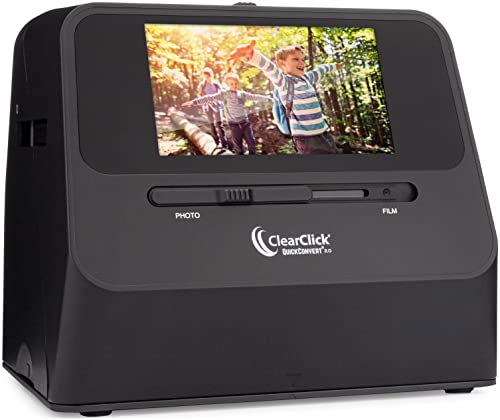
- Scans photos, slides, and negatives without a computer
- Fast 2–3-second scans with a 5-inch preview LCD
- Supports 4x6 or smaller photos, but not 5x7
Best For: Home users digitizing varied media quickly
Best Portable Option
DigitPro Mobile 35mm Film Scanner

- Uses a smartphone camera and LED backlight
- Foldable design with built-in battery and phone holder
- Scans 35mm negatives, slides, and color or B&W film
Best For: Beginners and travelers digitizing 35mm film
Best for Multiple Media Types
KEDOK 4-in-1 Photo and Film Scanner

- Scans film, slides, photos, and business cards
- Includes a 5-inch LCD, 8GB SD card, and internal memory
- Supports photos up to 5R and 35mm/110 film
Best For: Large mixed-media family or office archives
Best All-in-One Option – Magnasonic FS71 24MP Film Scanner
For shoppers seeking slide scanners for old photos, the Magnasonic FS71 offers a computer-free way to digitize several common film and slide formats. Its 5-inch display, 24MP JPEG output, built-in adjustments, and fast scanning make it practical for preserving a varied collection.
Best For: Families digitizing mixed film and slide formats without installing computer software.
Pros:
- Supports 35mm, 110, 126, Super 8 film, and 135/126/110 slides.
- Scans images in less than five seconds each with included trays.
- Stores files directly to an SD card and supports up to 128GB.
- Includes a 5-inch LCD with brightness and RGB adjustment controls.
Cons:
- SD card is not included.
- HDMI cable is not included.
- Its listed minimum system requirement is Windows 7 if using a computer.
The FS71 is a flexible choice when convenience matters most. It combines broad format support, onboard editing, and direct SD-card storage in a compact unit.
Best for Easy Viewing – KODAK Slide N Scan Max
The KODAK Slide N Scan Max is a convenient pick among slide scanners for old photos, especially for users who want a large preview screen and a simple workflow. Its quick-feeding tray, one-touch editing, and direct SD-card saving help streamline home archiving.
Best For: Users who want a large screen and straightforward controls for mixed 135mm, 110mm, and 126mm collections.
Pros:
- A 7-inch tiltable LCD provides a large viewing and editing area.
- Quick-feeding tray supports continuous scanning without repositioning every frame.
- Saves scans directly to SD/SDHC cards up to 32GB.
- One-touch tools simplify resizing, conversion, and image adjustments.
Cons:
- SD-card support is limited to 32GB.
- Its listed connection type is USB rather than HDMI.
- It supports 135mm, 110mm, and 126mm film, so other formats are not listed.
Choose the Slide N Scan Max if an easy-to-read display and uncomplicated operation are priorities. The larger LCD is useful for previewing and sharing digitized images directly from the scanner.
Best for Printed Photos – Plustek ePhoto Z300 Photo Scanner
Although it is not a dedicated film scanner, the Plustek ePhoto Z300 is worth considering alongside slide scanners for old photos when your collection includes loose prints. It feeds photos directly, scans a 4×6 image in about two seconds at 300 dpi, and includes image-enhancement tools for faded pictures.
Best For: Digitizing printed 3×5, 4×6, 5×7, and 8×10 photos as well as letter- and A4-size documents.
Pros:
- Supports several common photo sizes, including 4×6 and 8×10.
- Scans a 4×6 photo in about two seconds at 300 dpi.
- Offers 300 dpi and 600 dpi settings with up to 600 dpi optical resolution.
- Image-enhancement functions can help restore faded photos.
Cons:
- It is designed for printed photos and documents, not film or slides.
- Requires a USB connection and computer use.
- Feeds one item at a time.
The Z300 makes sense as a companion to a film scanner when the project includes albums or loose prints. Its fast feed and enhancement software are geared toward high-volume photo digitization rather than negatives.
Best for Format Variety – KODAK SCANZA Film Scanner
The KODAK SCANZA is a strong option for shoppers comparing slide scanners for old photos across several legacy formats. It converts 35mm, 126, 110, Super 8, and 8mm negatives and slides to JPEG files, while its included adapters and one-touch controls simplify setup.
Best For: Users with varied film collections who want broad format support and included cables and adapters.
Pros:
- Supports 35mm, 126, 110, Super 8, and 8mm negatives and slides.
- Includes multiple film inserts and adapters for flexible operation.
- Features a 3.5-inch adjustable-brightness TFT LCD.
- Includes USB, HDMI, AC, and video cables plus a film-cleaning brush.
Cons:
- SD card is not included, though the unit supports cards up to 128GB.
- It does not convert film formats outside those specifically listed.
- The supplied details list 14/22MP output rather than a single fixed resolution.
The SCANZA is best suited to collections spanning multiple older formats. Its adapter bundle and broad compatibility reduce the need for separate scanning equipment, while the built-in display supports quick previews.
Simple Standalone Choice – ION Pics 2 SD
The ION Pics 2 SD is a practical option for anyone comparing slide scanners for old photos and wanting a computer-free workflow. It scans 35mm slides, negatives, and several common photo sizes directly to an included SD card, with a built-in color screen for viewing images.
Best For: Users who want standalone scanning for 35mm media and prints without needing a computer during the scanning process.
Pros:
- Scans photos, slides, and negatives directly to the included SD card.
- Supports 35mm negatives, 35mm slides, and 3×5, 4×6, and 5×7-inch photos.
- Includes a color viewing screen and image transfer and editing software.
- Offers up to 2500 DPI scanning resolution.
Cons:
- The listed warranty is limited to 90 days.
- Computer software support is listed for Windows XP, which may limit compatibility with newer systems.
Its included SD card and standalone operation make it convenient for straightforward home archiving, while the support for both prints and 35mm film adds flexibility.
Large-Screen Film Digitizer – ClearClick Virtuoso 2.0
The ClearClick Virtuoso 2.0 is designed for quick film and slide conversion, making it a strong contender among slide scanners for old photos. Its extra-large 5-inch preview screen lets you view images as you scan, and it handles 35mm, 110, and 126 negatives plus 50mm slides without requiring a computer or drivers.
Best For: Film owners who value a large preview display, broad format support, and simple standalone operation.
Pros:
- Works with 35mm, 110, and 126 negatives and 50mm slides.
- Features an extra-large 5-inch LCD preview screen.
- Scans at up to 22 megapixels, described as interpolated.
- Includes a two-year warranty and free technical support from ClearClick.
Cons:
- SD card is not included.
- Mini HDMI cable is not included for TV output.
- It is intended for film and slides rather than standard photo prints.
The large screen and wide range of supported film formats make this a particularly accessible choice for reviewing and digitizing a varied film collection.
Versatile Format Support – KODAK SCANZA Film & Slide Scanner
The renewed KODAK SCANZA is a flexible option for shoppers seeking slide scanners for old photos across multiple film formats. It converts 35mm, 126, 110, Super 8, and 8mm negatives and slides to JPEG files, with multiple inserts, one-touch controls, and a bright adjustable display.
Best For: Users digitizing several types of film who want included adapters and straightforward one-step scanning controls.
Pros:
- Supports 35mm, 126, 110, Super 8, and 8mm negatives and slides.
- Includes multiple film inserts and adapters.
- Has a 3.5-inch adjustable-brightness TFT LCD with tilt adjustment.
- Provides one-touch scan-and-save controls and basic image editing options.
Cons:
- SD card is not included.
- The listed warranty is a 90-day limited warranty.
- This renewed model is intended for negatives and slides rather than standard photo prints.
With its broad adapter selection and support for less-common formats such as Super 8 and 8mm, the SCANZA is well suited to mixed film archives.
Best with Extra Features – ClearClick QuickConvert 2.0
For shoppers comparing slide scanners for old photos, the ClearClick QuickConvert 2.0 is a convenient standalone option. It scans 4×6 photos or smaller, 35mm, 110, and 126 film without a computer, then saves JPEG files to an SD card.
Best For: Families digitizing a mix of prints, slides, and negatives with a built-in screen and rechargeable battery.
Pros:
- Scans photos, slides, and negatives in about 2–3 seconds each.
- Works without a computer or drivers and includes a 5-inch preview LCD.
- Supports scanning photos without removing them from albums or mounts.
- Includes a rechargeable battery and a two-year warranty with U.S.-based support.
Cons:
- Scans one item at a time and does not have an automatic feeder.
- Does not support 5×7 photos.
- Requires an SD memory card for saving digital JPEG files.
Its fast, computer-free workflow and broad media support make it a practical choice for home archiving. The main limitation is its maximum 4×6 photo size, so verify your collection before buying.
Best Portable Option – DigitPro Mobile 35mm Film Scanner
Among slide scanners for old photos, this DigitPro model is the most travel-friendly approach. It uses a smartphone camera, LED backlight, and a foldable design to digitize 35mm color or black-and-white negatives and slides.
Best For: Beginners who want a lightweight, phone-based way to scan 35mm film at home or while traveling.
Pros:
- Uses a smartphone camera for quick scanning without bulky computer equipment.
- Supports 35mm color positives, negatives, slides, and black-and-white film.
- Foldable, lightweight design includes a phone holder and built-in battery.
- Includes a free app with color and contrast editing tools and no subscription fees.
Cons:
- Limited to 35mm film formats rather than prints or larger film sizes.
- Final image results depend on the smartphone camera and app workflow.
- Requires a compatible smartphone for scanning.
This is a simple, compact solution for casual digitizing and sharing. It is less suitable for users who need a standalone scanner or want to convert printed photos.
Best for Multiple Media Types – KEDOK 4-in-1 Photo and Film Scanner
If you need slide scanners for old photos that can handle more than film, the KEDOK 4-in-1 scanner offers a broad format range. It converts 35mm and 110 film, slides, photos up to 5R, and business cards, saving JPEG files to internal memory or the included 8GB SD card.
Best For: Households and offices digitizing slides, negatives, prints, and name cards with a large built-in display.
Pros:
- Supports 135 and 110 negatives, 135 slides, 3R/4R/5R photos, and business cards.
- Includes a 5-inch LCD for previewing and sharing scans.
- Requires no computer and includes 128MB internal memory plus an 8GB SD card.
- Offers one-touch adjustments for film type, color, brightness, resolution, and date/time.
Cons:
- At 2.2 kg, it is substantially heavier than a mobile film digitizer.
- Supports SD or SDHC cards up to 32GB, limiting expansion compared with some storage setups.
- Its wide range of modes may require more setup than a basic film-only scanner.
The KEDOK stands out when format flexibility matters, especially for users with prints and business cards alongside film. Its included card, large screen, and three-year warranty add convenience for larger home archiving projects.
How We Picked the Best Slide Scanners for Old Photos
We focused on scanners that are practical for home archiving and cover the formats most people have stored in boxes: 35mm slides and negatives, 110 and 126 film, Super 8 or 8mm film, and printed photos. We also considered resolution claims, preview-screen size, file transfer options, ease of use, scanning speed, included holders, and whether a computer is required.
Because image quality can vary with film condition and lighting, advertised megapixels are only one part of the decision. A reliable film path, dust-free handling, accurate exposure, and convenient editing or storage workflow can matter just as much.
Quick Comparison
| Best For | Look For | Most Suitable Type |
|---|---|---|
| Large slide and negative collections | Multiple film formats and fast batch handling | Standalone film scanner |
| Simple family archiving | Large LCD, SD storage, and no computer setup | All-in-one film and slide scanner |
| Printed photographs | Flatbed-style feed, CCD sensor, and photo-size support | Dedicated photo scanner |
| Occasional scanning | Low cost, compact design, and simple controls | Portable or smartphone digitizer |
| Replacing an older unit | Warranty, return policy, and tested condition | New model or carefully inspected renewed scanner |
Key Buying Factors for Slide Scanners for Old Photos
Format Compatibility
Check the exact formats in your collection before buying. Many units handle 35mm slides and negatives, while fewer support 110, 126, 8mm, or Super 8 film. Confirm that the package includes the right trays and holders rather than assuming every listed format scans identically.
Resolution and Image Quality
Higher resolution can preserve more detail for cropping and enlargements, but sharpness also depends on the lens, sensor, film cleanliness, and scan alignment. For casual sharing, standard output may be sufficient; for restoration or large prints, prioritize the best optical performance available within your budget.
Workflow and Storage
SD-card models are convenient for scanning without a computer, especially when working through a large family archive. USB-connected scanners may offer better control through desktop software. Look for straightforward file transfer, dependable power, and controls that let you adjust brightness or color when faded originals need correction.
Preview Screen and Speed
A large LCD makes it easier to position slides and review results before moving to the next frame. Faster scanning is valuable for hundreds of images, but speed should not outweigh reliable exposure and clean, properly aligned scans.
Who Should Buy Which Slide Scanners for Old Photos?
Choose a standalone multi-format film scanner if your priority is a large collection of slides or negatives and you want a dedicated, repeatable process. A model with a 5-inch display is particularly useful when you want to work away from a computer and inspect framing clearly.
A dedicated photo scanner is the better fit for boxes of 4×6 prints, snapshots, and documents rather than mounted film. For occasional scans or travel, a compact smartphone digitizer can be convenient, though it generally offers less consistency and control than a dedicated scanner.
Finally, renewed models can provide value when the seller offers a clear condition description, return window, and warranty. Whichever option you choose, clean the originals gently, keep fingerprints off the film surface, and back up finished files in at least two locations.